A

A
Showing posts with label books. Show all posts

Thursday, 3 February 2011

The Hare and the Crow.... oh dear!

Oh dear the credit card has taken another bashing and the profits of a well known Internet bookstore named after an area of South America have risen again. I'm meant to be on an economy drive and well the body is willing but the mind is weak.

I've had my eye on these species related tomes for a while now, as I'd come across the 'Crow' volume while researching corvids in the autumn. These species led monographs are part of the Animal series of books, published by Reaktion Books. They are not a field guide. In fact if you were to use them as a field guide, you'd be sadly disappointed.

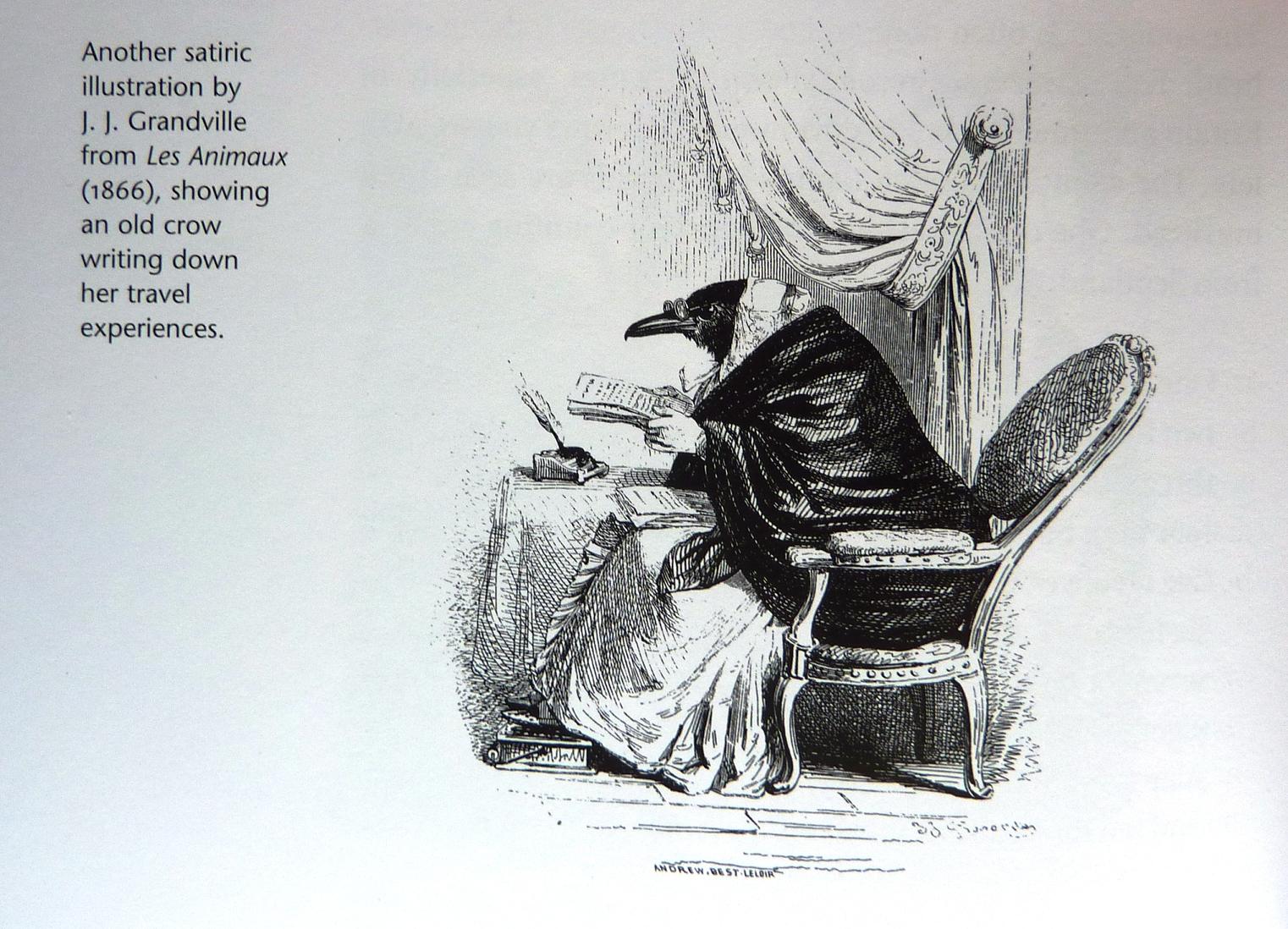
Illustration from the Crow

What they are is a veritable smorgasbord of exploration into the historical significance and impact on humans of a wide range of animals, everything from mythology to religion and science, alongside the trade in that animal, art and culture and their roles in literary imagination.

Anyway on Monday evening I was chatting to a colleague and we discussed these books. In a flash I had produced my flexible friend, fired up the laptop, and in less time than it takes to boil and egg, purchased 5 books. 2 for me, the Hare and the Crow and three for my colleague, Snail, Snake and Spider. I'll say nothing about his choice of species other than, he lives alone!

Illustration from the Hare

This afternoon these books arrived and having a bit of a flick through they're fabulous. The Hare book is particularly apt, as next Tuesday I'm off to a secret location in East Anglia to visit a wonderful woman who has been studying hares on a farm for decades. Weather permitting, guaranteed sightings and guaranteed a wonderful day as the individual hares are known to her by name.

I wonder if they (the females) will be boxing yet? A bit early but you never know. I feel a photo opportunity coming on.

Tuesday, 25 January 2011

An unexpected find

It's always good keeping an eagle eye out for books by favourite authors. As some of you may know, my all time favourite author is BB (the pen name of Denys Watkins-Pitchford), who while being possibly best known as a naturalist writer, also wrote a number of well known children's books. Brendon Chase is a famous one of his, but one I'd been after for a while is The Little Grey Men which was published in 1942.

This book tells the exploits of four gnomes, named after the flowers Baldmoney, Sneezewort, Dodder and Cloudberry. The plot is that Cloudberry heads off down the Brook and fails to return. The remaining trio decide to head off down the Folly Brook to hunt for their long lost friend and the story unfolds against a background of the English countryside throughout the seasons. This book was so well received when it was published, due to it's detailed descriptions of the natural world, it received the Carnegie medal for the best children's book of 1942.

But you're probably wondering why I'm rambling on telling you all this. Well yesterday lunchtime I popped out for a bit of fresh air at lunchtime. Just behind work is an Oxfam bookshop. I've bought quite a few books here so I thought I'd have 5 minutes for a bit of a rummage as I passed. Imagine my surprise to find The Little Grey Men in the children's section. It's a 3rd edition from 1957, but in remarkably good condition with a near perfect dust jacket. I bought it on the spot, despite the comment from the Oxfam employee who took my money, and said "you do realise this is £7.99" in a manner which spoke volumes - do you really want to pay this much for an old children's book. Maybe I should have come clean, but this book in this condition is worth about 4 times what I paid for it.

Not that I'm selling it. It will be added to the burgeoning BB library on my shelves. If you have never read a BB book, I'd recommend it, not least for the fantastic lino-cut drawings by the author.

Speaking of unexpected finds, and changing the subject completely, a North American purple gallinule has been found, sadly dead, in a Devon garden. Only the third record for the UK (if accepted) but fascinating. Details here:

Monday, 26 July 2010

An inconsequential weekend....

What is it about weekends? Friday evening promises much and within a gnats crotchet of time I'm driving back down the M4 from Wiltshire on a Monday morning to begin another week at work.

Friday : Or more accurately Friday evening


After a day at the coal face that is Wildlife Broadcasting in Bristol I arrived at my weekend retreat in Wiltshire ready for an experiment. Following a shower and fresh clean clothing we ventured out into the garden for sustenance and clutching a fortifying bottle of alcoholic grape juice. My plan over the weekend was to build and have a play with a home made moth trap (being far too mean to buy a proper one). I am absolutely hopeless with moths and as many bloggers and friends are now becoming expert, I feel I should improve my knowledge.

However on Friday night; possibly something to do with the inbibement of pino grigio, a mellow thought wafted over me. I wonder what will happen if I just place a bright light outside, given the garden is surrounded by fields? Moths will fly in in their hundreds and I can sit there identifying them to my hearts content. Well I have to say it was a dismal failure. Over an hour a handful of micro - moths aimlessly flew by and then we went to bed, with a plan to build a proper device on Saturday. Which Saturday I'm not saying, needless to say though, it's a plan unburdened by activity so far.

Saturday: Wiltshire, Berkshire, Gloucestershire

Julie had a noon appointment in Berkshire on Saturday, so we planned to have a leisurely start and then quickly pop to one of her gardens for me to help her with a bit of tying up then on for a coffee, perusal of antique shops and the afternoon stretching before us. At the garden in question we were met a terrifying guard dog of gargantuan proportions. He's a terrier puppy, full of life and bounded across the lawns to play with us. A peaceful morning it was not, as he has the energy and enthusiasm only puppy's have. He just never stopped. He's lovely though.

The garden however is huge and includes fields and a wildlife area. This made up for the mothing fiasco the evening before. Julie left me to check on the greenhouses and I wandered through a wealth of wildflowers awash with butterflies. Sadly I don't have a good macro camera at the moment for photos, but the following were in abundance. Common blue, and 2 Adonis Blue, Brimstone, Large and Small White, Gatekeeper, Ringlet, Peacock and Small Tortoiseshell. Hundreds of hover flies and bees buzzed about and grasshoppers churred everywhere. I'd love to go there and spend the day identifying them.


All too soon though we headed to town. After a coffee, Julie went for her appointment and I strolled through the myriad of antique shops the town had to offer. There I spied in one of the book shops Highways and Byways in Dorset by Sir Frederick Treves (1853 to 1923) who I've since found out was also the author of the Elephant Man. This was a second edition, 1935, in reasonable condition for £8. Julie had joined me by this time and she found for herself a Ladybird Book "What to look for in Autumn" book, which reminded her of her childhood, so that was purchased along with the Dorset guide and we left Hungerford a happy couple. I was especially happy as Julie bought me the Dorset book. A nice surprise.

We hadn't eaten so found ourselves by a method only we appreciate in a wonderful Organic Farm Shop just outside Cirencester called strangely enough The Organic Farm Shop. I've not been here before, but I'd recommend it for the food and the feel of a real organic farm shop and not somewhere selling organic products. Fed and watered we wound our way home via the Wooton Basset area, so we were back in Wiltshire. Julie has a client here called Barbara, more of a friend really. So on the spur of the moment we popped in, and after tea and cakes, I cut her large lawn and we left. Barbara is a wealth of knowledge and has a very sprightly mind for a 91 year old. We love talking to her and her past as she has lived all over the world and still has a mind which is looking forward. I hope I am like that in my dotage. Positive and fun to be with.

I'm also hoping as she has a huge wasps nest being built in a clematis that when the wasps leave later in the year, I can detach the nest and photograph it for the blog. Wasps are natures good guys with a bad press and their nests are absolutely stunning inside with their airflow regulation chambers.

Sunday - oh dear, it was all going so well too !!


A quiet day in the garden. Julie asked me if I'd sharpen her tools so as I sat there she suggested I needed some protection on my head from the sun. The resulting photograph is slightly disturbing. I can only apologise.

All in all a very relaxing weekend...... that photograph does worry me......... !!!!

Thursday, 9 April 2009

Where to go Wild in Britain; an Easter Challenge

A few weeks ago I was contacted by a member of the Dorling Kindersley publishing team out of the blue. Someone in the team had read my blog and I was e-mailed to see if I'd consider writing a review of a soon to be published book. I have to say no money is changing hands in this process, so after a few e-mails back and forth I agreed. I've now had a chance to read it and with Easter banging on the door for a well deserved break for many of you, it seemed apt to post the review today.

Where to go Wild in Britain; a month by month guide to the UK's best wildlife experiences is a substantial tome at 336 pages. ISBN 978-1-4053-3512-6

Dorling Kindersley are well known for producing well researched, clearly set out and easy to read books. This one, produced in co-operation with the RSPB is I have to say a little gem, well actually it's a big gem as it is a bit of a heavyweight. It's too big to taken into the field, but that's not really what it's for. This is a lavishly put together and well planned guide.

Mike Dilger, a friend of mine, writes the forward although I didn't know this before I received the book; in this he says "...a selection of the finest places and most extraordinary sights the British Isles has to offer". And that really sums up the aim of this book. There are a bewildering array of books on the market offering best places to visit in the UK; but I do have to say this one does seem to have pitched itself at the right level and found a niche. A book like this can only ever offer a selection of sites to visit, but having looked through some areas of the UK I know well, it does cover what I'd expect to see very well. This isn't however an identification guide. What I think this does well, is simply puts across where to go and what you'll see when you're there, in an easy to read guide for the family or the enthusiastic amateur naturalist alike.

One of the main things we in the "profession" overlook is that when beginning an interest in Wildlife watching it is often daunting to know where to go, not just to see nature, but to feel safe in the countryside. Often people feel intimidated asking someone for information when out in the field, we've all experienced the frosty look of an optic laden camoflaged wildlife watcher when asking what he's looking at. So this book should go some way to helping find that wildlife site near you, or what to see when on holiday or days out.

Clearely set out on a month by month basis, the beginning of each month gives a 2 page spread of where to go during that month. This is then followed by more in depth information about these places or individual species on the following pages. This is a boon for the beginner. Suggesting a visit to see the massed starlings on the Somerset Levels is one thing, but I've been asked numerous times in the summer months, will I see them today, only to see a crestfallen look as I say you'll need to come back in December or January. We often over look that many wildlife spectacles only happen for a short few weeks, or even days, such as Mayfly emergence. Knowing when to go, how to get there and just as importantly where it is safe to go and see this is well set out in this book.

The left hand column of the in depth pages gives a map of where this place is and clear information such as contact details, getting there, access, opening times and of course if there's a charge for visitors. The right hand column suggests other locations with similar wildlife around the UK. The bulk of the text gives just the right amount of information on the subject, though it would have been nice to have a further reading section on these pages for those wanting to know a bit more. But this is a very minor point.

There are also handy regional maps and a directory in the back of the book to source that piece of wildlife near you. As with all DK books the photographs are stunning and actually I just enjoyed reading through the book and looking at the images, and of course you just have to indulge me in using the Holy Island page as an example for the blog.

I actually liked this book very much (and remember I'm not getting paid for saying this either). It isn't an academic paper, or an identification guide, it is just what it says on the tin, or should that be cover; a guide to where to watch wildlife in the UK. Aimed at families and beginners to wildlife watching, I was surprised how many places I found I'd like to go to myself so would recommend it to everyone with a quest to discover something new out there. My only reservation is it's size, so really this is a stay at home coffee table book, and at £25 a grande cappuccino read. But I thoroughly enjoyed sitting with a glass of wine and planning a few days out with this book.

Wonderful though the photographs are, nothing beats being out there with nature. Go on it's Easter, put your wellies on and get out there......

......... which neatly brings me, now you are all out there doing it, to the Quicksilver Easter Bird Challenge. The rules are simple and this is just a bit of fun really, no prizes I'm afraid.

Details here

I'll do my best but will be travelling to the North East in an hour or so, so it will be interesting to see what I see as I drive around the UK. I'll post the results on the 19th April, so if you could get get your reports back to me by the 18th that'll be great. Unlike last time, please send them to my e-mail address, which is in my profile.

Which just leaves me to wish you all best of luck, wherever you are in the world reading this, a Happy Easter.

Tuesday, 24 June 2008

I can read readin', but can't write writin'

I was reflecting the other day (partly as I need more book shelves, partly as my ideas over my book are being formulated), what did we all do to learn about the World, before the Internet? We'll I for one read a lot more books then than I do now. The Internet is such a huge source of information these days (mind you a lot of it isn't that great) that if I need to look something up, or identify a small insect, plant or so on, I often use the web first.

And while I think this is not a bad thing, I just wonder how many teenagers today were like me and bought book after book on their latest hobby or interest. But then I was odd. Most teenagers I knew were chasing girls, playing "split the kipper" with very scary knives or lounging about in fields being bored and shooting things with air rifles. I did that of course, but I always came back to nature as my reason for living.

But like many others, I forget that even 10 years ago, the Internet was in it's infancy, 20 years ago no one really knew about it. In 1986 I got a job as one of a team of 12 computerising a large Central Library in the North East, and it was just the most amazing job, as my love of books was combined with new-technology. We had infrared keyboards, which was great fun as we'd fiddle about with the frequencies and when someone was working, intercept their work. A good old laugh, but we got the work done, and after 6 month I was asked to be a "Librarian". I had my own date stamp and everything, and stayed for 3 very happy years, before the call of the wild drove me to Newcastle University's Agriculture Department.

But what was I reading 20, 25 years ago? Being in the "book trade" I got to hear about all the new wildlife and related titles and bought everything voraciously, via a preferential scheme, 20% off, as well as from bookshops of course. So this morning I've had a very swift look at the BOOKS ONE HAD TO HAVE in the 1980's. I thought I'd share some of these with you, it's been fun looking at them again in the 2000's. They're a bit dusty though (click on a photo to enlarge).

Starting with BB. For me the most important influence on my life. Classic Poacher turned Gamekeeper, he like Peter Scott and others realised the world was fast changing, and conservation was the future. He did great work on the Purple Emperor butterfly, although these days his methods would be condemned. But in his time, a great conservationist.

I was a member of the Mammal Society in the 1980's and bought many a learned pamphlet. Mustelids (Otters, Badgers and so on) are my real interest, particularly Otters as for a few years I surveyed, trained up volunteers and just generally became obsessed, during the dark days when an Otter sighting became national news. Wonderfully today they're back with a vengeance.
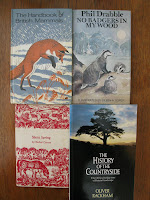
To really understand Wildlife, one needs to understand fully, the history of land use, especially in a country like the UK, where every piece of countryside is man made and managed, underlying geology, and therefore soils, hydro-graphic principles, aspect, and so on. The list is endless. But those books above have provided me with so quality reading. Oliver Rackams History of the Countryside is a must, as is Silent Spring by Rachel Carson, which while this didn't kick off the conservation movement per se, brought the mess of the post war years and poisoning of the land, to the public attention.

And these are just great reads, though I must admit, looking at my Otter books, I have too many really, I must have bought everything that came out. Mind you these Helm guides (on the right), although dated are still valuable tools.

Which brings me to my final story. I made a complete prat of myself years ago. I was at a Mammal Society Conference in Leeds, and was honoured to be having lunch with Ernest Neal, the undisputed Badger Man. Being a spotty overly enthusiastic 20 year old, I blurted out to a companion as a way of introduction, "this is the great Ernest Neal, you know the badger man, writes books and everything, he's great [sic]". To his credit, a reserved and true gentleman, he never batted an eyelid, but I could tell what he thought about me. But the lunch went off splendidly, and despite my gaff, I am truly grateful that for that short time at least, I was in the company of a great man.

Maybe one day I'll tell you about my first meeting with Sir David Attenborough, and how I nearly knocked him down the stairs.... but that's for another day.