A

A
Showing posts with label Roe Deer. Show all posts

Sunday, 15 December 2024

Tune Into A Quiet Winter

In mid December, so the guide books say,  the natural world turns silent. Or at least it did in my younger days in the North East of England. Somerset on the 15th of December was quiet, but not silent. I like this time of year.

It has been nearly two months since I've managed to head out for an afternoon of wildlife watching.  A combination of being busy at work, very enjoyable though that is producing Radio 4's Tweet of the Day, a poorly father and other commitments meant spending time outdoors had dried up completely. However in a moment of wild abandon I headed off to Catcott to spend an hour or two observing nature. 

Rarely these days do I take much equipment with me. I travel light now. Gone are the back breaking rucksacks brimming with scopes and tripod. These days just my trusty Nikon binoculars and (hopefully) enough knowledge to remember the names of that which I observe.


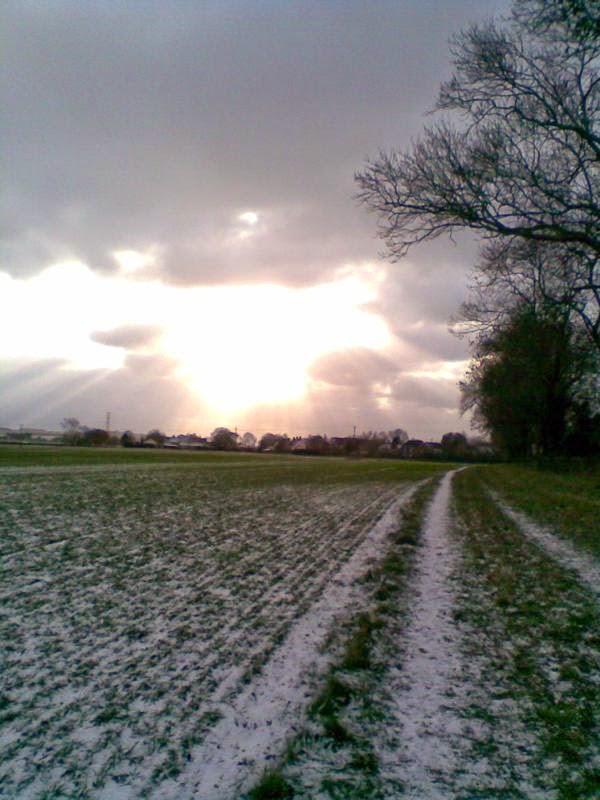
And a mobile phone, such remarkable things. The image above is not perfect, but for me good enough to illustrate winter wildlife. Catcott Lows comprises of seasonally flooded grassland. It is a winter wildfowl spectacle. Wigeon, lapwing, shoveler in good numbers; teal, pintail, snipe, egret, grey heron, mallard. In summer the site is drained leaving a lush grassland often deserted, unless the determined observer, quietly observes. I've heard grasshopper warbler here, watched hobby hunting dragonflies, barn owls drifting by on summer evenings and even on one occasion a mega-drop of passage swallows in their hundreds possibly thousands one spring.

It is in winter however that I visit more frequently especially a quiet area of the reserve rarely used by visitors. An unobtrusive track which vehicles use is a good start, with mixed species in the trees, today enriched by two greater spotted woodpecker plus a smattering of winter thrush. After half a mile an old peat workings track diverges off and is home to roving tit flocks, chaffinch, wren, blackbird as I observed today. Sometimes siskin and redpoll are to be found, goldcrest and rarely firecrest too. Not today though. Today gently unfolded as a quiet walk listening to birds.


In the distance the whistling of wigeon was ever present, with the 'pee-whit' of lapwing providing the lead vocals. But in the trees family parties of long tailed tit noisily foraged the alder. A number of blackbirds tik-tik'ed away at some imaginary intruder, a heron 'franked' his displeasure on being disturbed, a bevvy of wren scolded the air, chaffinch pinked their presence, robins announced the sunset, wood pigeons cooed and members of the crow family noisily flew by calling their species name. There was neither silence nor stillness today.

I had to pinch myself it was mid December, and to be honest the 12oC temperature did not help disprove the illusion of early spring. The only silent encounter, three roe deer resting within tall grass before, having noticed me, pronked away silently to safety, a solitary chiffchaff foraging upon high and a little egret performing leg stretches. Everywhere else the signs, strictly speaking the sounds, of the natural world were evident. 


Gorse was in flower, goose grass, as it is sometimes called was growing strongly, winter gnats were on the wing, even flies buzzed nearby. And today's weak sunshine had warmth. It was a perfect day for a walk, the penultimate day before the sunset times inexplicably lengthen from the 17th. 

The track gradually narrows from a few meters wide at the beginning to at its end just wide enough for one person. In it's latter stages wet woodland flanks its route. I've never seen woodcock here but I'm sure they will be in there. In the same vicinity a Cetti's warbler erupted and a water rail recreated the victims squeal.


In two hours I'd seen many bird species but the remarkable engagement was one of quietly observing. I wasn't walking quickly, two miles in two hour will break no records, however that slower pace allows time to stop and stare. The three roe deer were an illustration of this. It was only by chance while idly scanning the field did I spy three sets of ears, ostensibly looking like those of a brown hare. One deer then raised itself off the ground, stretched, yawned then stared directly at me. Deer do this. We think we're clever, skilfull, stealthy and unobserved. In reality the deer will have seen us from a long way off well before we've seen the deer. However they do have a blind spot. 

I didn't believe the myth that you could walk towards a deer (slowly) until I witnessed it for myself decades ago. The head warden I worked with at Cragside proved this to me. I remained motionless someway off but step by step he walked towards a roe deer head on until he could only have been six feet away. Then the deer saw him and bolted into the woods. The warden told me in his younger days he controlled deer for the Forestry Commission as it was then, that experience taught him the skill of being unobserved but only if directly head on, and due to the position of deer eyes. I've not tried this myself.


I've digressed. This recollection of my afternoon walk seems to have developed into memories and encounters. Simply because I took time to observe, from water droplets on grass stems to a marsh harrier lazily quartering the assembled waterfowl. Not bad skies either.

Tuesday, 25 November 2014

November 25th 2014 - Winter's grip

"Tracks led everywhere on the tell-tale white mantle of snow. The roe, the rabbit, the fox and the hare had left their stains. The spoor of pheasant, woodcock and blackbird marked the surface where they had striven for sustenance beneath the snow-covered earth. Below a holly bush, where snow had not penetrated, the tiny wren, his tail cocked upright, flitted about amongst the leafy carpet. At the eastern end of Blackburn Lake the leafless silver birches stood out against the white background like witches' brooms"


So wrote Henry Tegner (1901-1980) in 1953 in his story of a roe deer, The Buck of Lordenshaw.

Henry Tegner was writer, naturalist and a deer expert; president of the Deer Society, firstly gaining his knowledge of deer in Dorset before later later moving to Northumberland. Here he continued his work from the village of Whalton near Morpeth.  He wrote 25 or so books, primarily centred around the Northumbrian landscape and the wildlife that it contained. The Buck of Lordenshaw is as far as I'm aware the only life-story of a deer that has been published. His description is as mesmerising and evocative as other more familiar works about a single species, such as Tarka the Otter and yet this life and death struggle of a roe deer in and around the Cragside Estate near Rothbury is largely forgotten. As is this wonderful author.

I have a first edition copy of that book next to me as I write, and flicking through the pages I am drawn back again to that part of remote Northumberland. This week in Somerset winter has finally showed it's first fingertip grip on a mild autumn, a light frost covered the fields. December next week yet snow, significant snow, seems far off. However Tengers words on the page I am looking at, transport me back to an often taken woodland walk in winter.

"Silence reigned over Cragside save for the soft whisper of the snow as it fell upon the fir tree... It intensified the boundless silence of the whole countryside".


It is a silence I remember fondly and hope to relive again this winter. Many is the time I have walked in the winter wood. Snow knee deep at the woodland edge slowly thins as I push forward past long dead summer vegetation into the corral of trees around me, into a silent world. Is the countryside silent? Muffled maybe. Snow provides the silence of the wild, save for the crepe and scrunch of boot on snow, a tactile satisfying sound no other substrate can mimic. Tread gently and my foot silently sinks into the opaque void, but, apply a little pressure, and the tell tale crepe of compressed flakes brings joy to my activity.  

Crepe, crepe, crepe my footfall softened. I hear my breath leaving me, billowing in a condensed cloud as I move. I am removed from the ground I walk over, soft snow obliterates form and shape, all is uniform, all is silent. I stop and listen. Nothing but silence. Nothing but the thick curtain of trunk and branch, dark against the pale sun bleached winter sky. The dark wood is silently observing me, and at leisure for the first warming rays of April sun. Then these woods which now sleep a deep midwinter's sleep will awaken to spring's choral, the willow warbler, the pied flycatcher, the chiffchaff and redstart will jostle for song borne soundscape.

Today though I am remembering the joy of a wood in winter, I revisit to a silent world, lost in thought, my stride is measured and steady. Lost in my own thoughts, time stands still, yet it has begun to snow, softly. Single flakes breakthrough the canopy mesh to float silently and alone to the woodland floor. I watch them, spinning in unison before being absorbed into the snow-mass within. Without, a heavy fall has begun, dark clouds against the white landscape, swirling flakes coating the trunks of the outermost trees. But, inside the womb like cavern of a winter wood, single flakes gentle fall, in silence. I catch one in my gloved hand. So light, so delicate yet in a moment it is gone, returned to its liquid state by my internal heat.

Light is fading now, I retrace and make my return across the fields. Illuminated from below, the landscape has a pearlescence to it,  unique to a winter snowfall. Even indoors the radiance of light from below adds a glow to a room that even without looking will confirm that indeed snow has fallen overnight. That terra firma pale glow extends dusk well beyond its scheduled timeframe. A buttermilk glow may further brighten the west sky. No torch is required to light my way home today. 

Trees silhouetted against the fading light stand isolated in the white of a countryside at sleep. Maybe a robin will break my reverie as the smoke of a cottage fire drifts listlessly up into the falling flakes.  The pheasant metallic nasal call likewise drifts from some unseen hedge, it is a sound of winter to me. The countryside is closing down for the day. Along the field I walk, my face both hot and chilled with the exertion against a cooling air. I'm home, where I shall sit warmly and wish it will all remain as I remember it, for another day. I never tire of snow.


Henry Tegner's daughter Veronica Heath carried on his country diary traditions and wrote for the Guardian for 35 years. In one of her last postings she recalled 6 of her personal favourites. For me, reading Henry Tegner's simple description of the silence of snow, did what all good country writing aspires to do, to simply transports memories into a clear view, the natural elements, the suggestion to a spirit of place.


Images: Top to bottom:
Fallow Deer - Stock Gaylard Estate, Dorset 2007
The view from my home-office over to Wales 2011
The big field, East Grafton, Wiltshire. 2010
Through the hedge, Somerset 2012
Julie's Tree, Wilton, Wiltshire, 2011.

Sunday, 17 February 2008

Up with the larks

Planned to go birding today with three other birders I've known for a while who are a lot more experienced than I am. I tagged along very much as the pupil. 8.15 am rendesvous on the Somerset Levels for a fry up before the off. Which meant a 7am depart from here. Boy was it cold setting off, I'm only glad my car has a self defrosting windscreen. Glorious sunrise over Bruton on the drive up.

The Levels were gloriously frosted, but we headed to the Mendips for a Grey Shrike (not found) but a nice Roe deer, complete with antlers in velvet, 2 Mistle Thrush were the highlights. Then down to Cheddar Resevoir, where almost immediately across the other side of the water, a "small grebe" was spotted, which after a quick dash over there was confirmed as a Red Necked Grebe. How on earth that was spotted half a km away through a scope is a mystery to me but proves we all lean something from others. Great Crested Grebes are also well into courtship display. Left Cheddar after clocking a male Siskin and Blackcap, and headed to Shapwick NNR for the Firecrest. Firecrest not found by bird song specialist, but fair numbers of passerines.

Left : Looking for the firecrest at Shapwick !

Sadly I had to depart then, while they headed off to Minehead and Hinckly for Iceland Gull (Text confirmed they'd bagged that one in a carpark) and high tide. The drive home saw me stop at a field near Yeovil, containing 9 Buzzard, 200+ Lapring, while over the lane 50+ Fieldfare.

In Afternoon had a quick look down at the river here, 2 Roe deer in the thicket, and a chiffchaff singing.

Later at about 10.30pm as we drove back from Yeovil having seen the Ukelele Orchestra of Britain (I'd recommend these) Barn Owl across the road at Stalbridge Park brings year total to 96. 4 more to top the 100 species by end Feb.