I believe every naturalist must have a modicum of madness running through their veins. If like me you began in short trousers simply observing what is close to home, before too long you now find yourself wearing long trousers venturing far and wide indulging in a sheer obsession. If this strikes a chord then you'll understand what follows.
While half an hours drive from home, I now consider the Quantock Hills (or Natural Landscape to give it its new and now correct title) one of my local patches. Visiting two or three times a month throughout the year I've got to know this special landscape well. There is however, to be truthful, an awful lot more to learn about this magical area.
Last summer at around midnight I met a chap out walking his dog. I'd been watching nightjars with my wife and we were just thinking of heading home, when this chap emerged out of the darkness with his labrador. He was from nearby Williton. We chatted about the nightjar routes, he mentioned where the males lek, which valleys they move between at different times of the night and then just casually threw into the conversation, "come earlier in the day and you can watch the Dartford warblers just over there before heading off to view the nightjar at dusk." With those words he and his dog disappeared into the night, leaving me in a thoughtful mood.
I'd wandered this landscape for years but had never seen a Dartford warbler, and to confirm my ignorance had not realised they were here. I'd seen Dartford warblers many times in Dorset, but never here. A mental note was lodged in my mind and returning to the car we drove home.
Moving the story on by a few months, having retired in March this year I have what can be described as a need to focus on regular activity to maintain my identity and self worth. In other words I've a lot of time to fill so don't waste it. As any lifelong naturalist will tell you, we rarely do.
The sun was up, I had an empty day, and recalling the area pointed out to me last summer, what better then than popping to the Quantocks and look for a Dartford warbler.
This was at the end of March. On that first visit I saw, absolutely nothing. Plenty of other birds, skylark were everywhere, linnet, wren, meadow pipit, and stonechats and dunnock seemingly performing on every gorse bush. Which proved a problem. These latter two species while not sounding or looking like a Dartford warbler, were providing me with a lot of distant activity to check as they flitted between gorse bushes or sang a sub song which made me think "What's that?" After three hours walking nearly five miles in ever decreasing circles I gave up. It had been a brilliant day, but one tinged with an empty feeling.
The following week I returned. In the mean times some internet research had revealed that after suffering a bit in the 2010, 2011 winters and the Beast from the East in 2018, the recent mild winters have bolstered the population to 68 pairs in 2024. Given the Quantocks only covers about 100 square kilometres, they'll be easy to find. Won't they? On this second visit I headed to a more mature stand of gorse I'd seen the previous week thinking it looked a likely habitat. The sun was hidden, and the wind was up, both added to the sense of isolation up there, a feeling heightened as after spending nearly four hours on the hill I saw no-one. I didn't see a Dartford warbler either. This was proving difficult. Actually this exemplifies what a lot of nature watching is like, hard slog if you don't have local up-to-date knowledge. But in many ways that's half the fun, the quest.

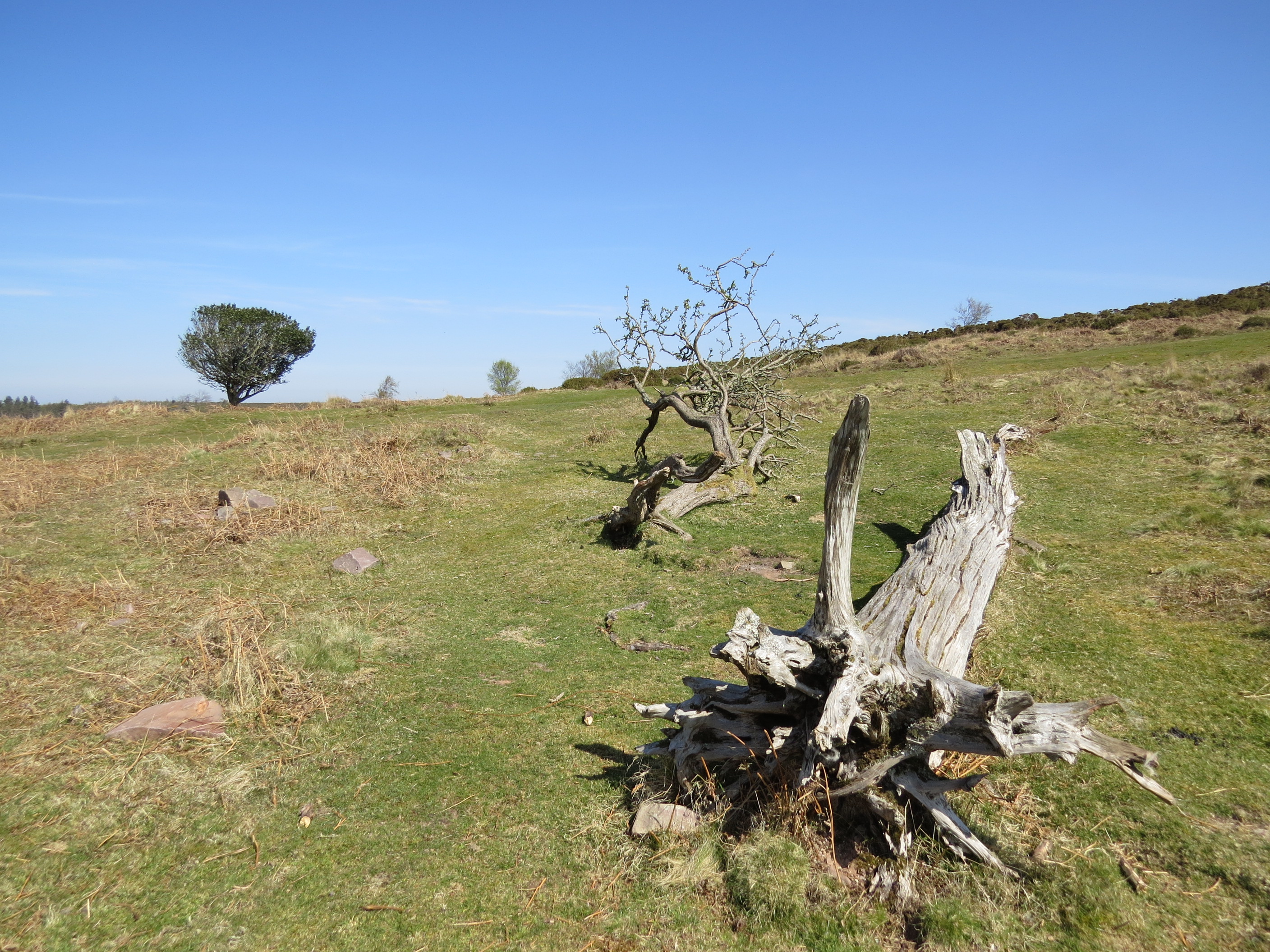
By now the sun was emerging so I sat for a while on a fallen tree with a mug of tea from my flask. My mind cannoned thoughts across its now retiree neurological network. I know the Dartford warblers are here, the habitat is right, the landscape is perfect, the other indicator species, stonechat, linnet even wren are here in good numbers, but no Dartford warblers. Plan B - and an option I don't normally use. I came home and scoured social media. One account I have followed for a long while popped up "my best ever Dartford warbler image last weekend on the Quantocks". In one of the replies to that posting a specific location was mentioned. I knew exactly where it was. If you read this, thank you Carl Bovis.
Three days later I found myself on the hills again, this time with my secret weapon, Mrs Wessex Reiver, who is very good at spotting things. We tramped up hill and down dale, criss-crossing this area mentioned in the Instagram post. A malady and depression was beginning to grip me when Mrs Wessex Reiver shouted, "Is that it?" Bingo! A dark miniature lollipop sped away from me in an undulating flight and into a dense stand of gorse. No mistaking that outline, no mistaking that flight. And then it called.
Collins Bird Guide describes the call as 'distinctive' - a drawn out harsh chaihhrr sometimes with an extra note chaihhrr-chr. Which is tremendous. I agree it is distinctive but has for me the quality of someone quickly scratching their fingernails down a chalkboard whilst dancing a tango. Once my ear hears it I remember it, but to attempt to describe the call is fraught with interpretation misdemeanours especially alongside the aforementioned stonechat song, linnet song and now the whitethroat are also back. The calling ceased and that was it. However I'd seen one for all of two seconds, thanks to Mrs Wessex Reiver, who while chatting to a local on the way back, had it confirmed to both of us we were in the right place, but they were flighty at the moment.
My fourth visit occurred three days later. The sun was up and a strong wind was carrying sound across the landscape. In those intervening three days many trees had greened up and hawthorn blossom was beginning to bud up. Once again I was up here on my own in my own world. Two kestrel flew along a ridge, a pair of buzzard spiralled in the wind. Everywhere stonechat and wren called and I heard the rustling of dry grass. It seemed to be coming from just meters away from me, until I realised on the other side of a combe a large herd of red deer were slowly moving through last years vegetation. Mostly hinds and young there were a couple of young stags, one with an antler missing making his head lopsided. It made for a magical sight and I counted over thirty while watching them head down the combe and over onto the next hill. So engrossed was I that I'd forgotten about the Dartford warblers.

Eventually the deer disappeared and I resumed by quest and only moments into walking along a ridge path I heard what I'd come to see. Initially I couldn't locate it until it flew off into the distance before perching on a mature gorse. Through the binoculars I had the most glorious view, for at least two seconds before it flew back and down over the ridge. I could hear it calling but to see it was impossible. I was in the right place yet again.
Yesterday I had my fifth, and in many ways, my most successful day. Mrs Wessex Reiver was with me but went for a walk, leaving me to my birdwatching. In all I spent eight hours on the hill, and saw some amazing wildlife as I sat for hours observing. Merlin and peregrine hunting over the moor, my first cuckoo of the year. Two common lizards fighting next to me. The whitethroats had now arrived in numbers, their calls were everywhere. Skylark, stonechat, linnet, meadow pipit, wren and dunnock. A red kite drifted over, still a fairly uncommon sight in Somerset. And three Dartford warblers.
One Dartford warbler flew right in front of me, perched then disappeared over the hill. In another location a pair flew between gorse and out of sight, only their calling revealing they were still in the area. I did a little mental arithmetic, with the three today and those seen earlier in the month I'd seen five individuals, possibly six. However none of them stayed still long enough to allow for an image.
I'll leave you then with a terrible photograph of a whitethroat, in the same habitat the Dartford warblers were. I wonder if I'll ever photograph a Dartford warbler? Does it matter if I never do? Probably not, but in this world of social media imagery, a picture counts for more than a thousand words. More likes of course.
It seems the chap Mrs Wessex Reiver chatted to a couple of days ago was correct in his summation "they're flighty - best to come when they're feeding the young then you'll have a reference point to observe where the nest is". Sound words of advice there. I'll be back. But will they be here to see?