A

A
Showing posts with label Writing. Show all posts

Sunday, 17 March 2024

A Portrait of John Moore


Gloucester Services on the M5 (Northbound) is as good a place as any to begin to explore the writer John Moore. 

After an early start from Somerset I'd stopped here for breakfast while travelling up to Tewkesbury, or Elmbury as Moore referred to his home town in his Brensham Trilogy. While forking in the nourishment I took time to plan my day. This was to be a relaxed general discovery day, the second of my ad-hoc project to visit the graves and landscapes associated with rural authors I admire. Tewkesbury Abbey, John Moore's grave, John Moore Countryside Museum, Tudor House and finally the village of Kemerton. First though the Abbey.


Between the wars John Moore was tasked with fundraising by the then vicar of the Abbey, Edward Gough. At this time the fabric of the Abbey was crumbling and Moore, who was working for Gough,  had the not inconsiderable job of trying to raise £25,000 for the repairs. To raise such a large sum Moore organised a Tewkesbury Festival and to his credit the money flowed in allowing the repairs to occur. Nearly a century later this would be my first visit. And it is beautiful.


When I arrived it was still early, meaning I had the place virtually to myself. I sat for a while thinking  of Moore, who despite not being religious in the traditional sense loved this monument to religion. I can understand why as I gazed ever higher at the craftsmanship and detail. If I did nothing else today seeing this interior would have been worth the drive all on its own. However I'd come to the Abbey to find Moore's grave.


I'm not sure what the correct description of Moore is. Writer and broadcaster possibly, campaigner for certain. His biography by David Cole is titled True Countryman. I think then for me Countryside Writer fits a large swathe of his output over the years as it wasn't just nature he wrote about. His interests were many, ranging from the rural scene, changes to the social fabric of the countryside, the people and characters he encountered, conservation of buildings in the town he loved and customs and ways in farming. He also wrote about his time abroad and his World War 2 experiences as a pilot. He was also outspoken on topics that interested him, sometimes bringing him into conflict with those he opposed, or opposed him.


I asked the lady managing the Abbey gift shop if she knew where Moore's grave was. She didn't and confessed she'd heard of his name but had no idea who he was, before suggesting I ask a verger. "Oh yes" the verger said, "out the north door, then head to the left over the grass and it is over there". I thanked her and headed outside, to the area of the Abbey grounds she'd mentioned. There were a number of graves here but after a fruitless search I couldn't find Moore's. I'd been informed by the Chair of the John Moore Society that his grave had recently been cleaned. None of those I searched through were what I'd call clean. Maybe I'd misheard the verger, was it was located at the left of the Abbey as you entered. No, nothing. Checking an image I'd seen of his grave on my phone it had what looked like a gravel path next to it, and where I stood only grass was visible. I knew it was here, I wandered off to another part of the Abbey grounds.


I eventually found it nestled in near the south side of the Abbey, in the exact opposite direction to my instructions. It is a lovely spot to rest in, overlooking the river and with a little sitting area somewhere for the living to also rest a while. I sat on a bench next to the grave to reflect on a man who did so much for Tewkesbury and the Abbey, but who is almost forgotten today. If that is not a metaphor for life I'm not sure what is. My reverie was interrupted by a screeching and a low cronk cronk. A peregrine - they nest on the Abbey I was later told - was circling a pair of raven flying along the river. Other birds, chaffinch, goldfinch and robin especially were singing nearby. It all seemed apt, a peaceful spot to be enriched by nature, in the centre of a very busy town, a town which houses a museum in Moore's name.


I've been to the John Moore Countryside Museum once before, about eight or nine years ago. One of Moore's campaigns was to prevent the demolition of the timber framed and old buildings of Tewkesbury after the War. Many to be fair were in a perilous state and the Town Council wished to modernise the town as there had been a plan to make Tewkesbury an overspill town for the West Midlands. Some buildings were lost, but through Moore people rallied to the cause including his friend Sir John Betjeman adding weight to the fight in writing of the need to preserve this unique heritage. As a result of which around a hundred buildings avoided the wreckers ball. The Museum is housed in a row of buildings preserved by their efforts 


I chatted for over half an hour with the knowledgeable gentleman at the desk. Not just about Moore but a wider ranging chat about writers in general. The Museum itself is quite small and concerned mostly with education and information on the countryside. Display cases of stuffed animals are well presented and the information is up-to-date, such as the role the return of the pine marten would play in grey squirrel red squirrel fortunes. It has had a revamp since my last visit, now feeling less cluttered. Outside the museum is a lovely garden and next door a restored Tudor Merchant's house. I didn't visit either of these this time as there was a tour taking place and I didn't wish to tag along. 

Interestingly my conversation with the custodian touched on the similarities between Moore's legacy with that of Richard Jefferies' legacy. Both wrote about the rural scene, both campaigned for causes they felt warranted their attention and both have museums named after them. However in the opinion of the custodian although the two writers are sometimes favourably compared to each other, Moore himself was no fan of Jefferies' output, thinking it too anthropomorphic and fanciful, written by a dreamer. Which could explain why I almost never see references to Jefferies in Moore's writing. I left the Museum, with a first edition copy of Moore's September Moon, and headed to the home Moore lived in as a child, at the other end of the main street.


Tudor House as it was in the early part of the last century was where Moore lived in childhood. His family were part of the long established Moore & Sons auctioneers business. John Moore himself worked for the family firm but it was a vocation he never enjoyed and by all accounts wasn't very good at either. Today it is the Tudor House Hotel an imposing timber framed building, which despite its name actually dates from the 17th Century. On this visit I didn't go inside but the rooms from which  Moore looked out from over the busy street (and slum alleyways in his time) are bedrooms to stay in. There is however a plaque outside to commemorate his time here. I'd now visited Moore's grave, his home town and his childhood home, my final destination was the nearby village of Kemerton where Moore lived before his untimely death aged 59.


Kemerton is a picturesque village, a hotchpotch of architecture-Midland style. From timber buildings to Cotswold stone, Georgian brick to individual modern. Moore and his wife Lucille first moved here in the late 1940s, first to Chapel House then Lower Mill Farm where finally Moore had the space to develop his interests in creating a natural environment surrounding the house he could enjoy. It's not a large village to explore so first I'd have a tea in the village cafe and look at the map.


Chapel House is a beautiful Georgian brick building on Hill Lane. Running the length of Hill Lane is a culvert stream. As I walked up the gentle slope the trickling sound of water filled the air. This is middle England in its purest sense and I could imagine why Moore and his wife loved this village. On my visit grass was being cut, a hedge was being trimmed into shape, everywhere there were spring flowers. People out for a walk or working in their gardens said hello, while birds sang. After leaving busy Tewkesbury only 5 miles away Kemerton seems a calming peaceful place. I didn't loiter for long outside Chapel House, it is after all a private dwelling, but on this visit the garden was full of primroses and spring bulbs. I wonder if in Moore's time it was just as beautiful.


Lower Mill Farm is at the opposite end of the village tucked down a side lane leading only to the farm. This was Moore's final home and although his health was beginning to fade it was a place he threw his energies into to create what he'd always craved, a house within nature. As I walked through the village song thrush and blackbird song seemed to be everywhere, a nuthatch too. Rook and jackdaw squabbled in the mature trees. Here it seemed nature ruled village life and I could imagine Moore walking around the village absorbing the best that the natural world had to offer.


My visit to John Moore's land was drawing to a close. Before I left though I headed into St Nicholas Church. And that proved a revelation. Largely rebuilt in the Victorian era this hides an amazing artwork on the ceiling and behind the alter by a Miss Hopton. Sadly she was killed not long after completing this masterpiece in a dog-cart accident while out cycling. I discovered this information talking to the two church wardens, there to clean the church.

When he was a child one of the church wardens, as it turned out, said he knew and could remember John Moore. His father knew Moore but it seems they fell out over the collection of water charges. The story told to me being that the lower end of the village then had a private water supply and Moore was charged with collecting the usage fees. This chap's father refused to pay (why this was wasn't offered) causing his father and Moore to not speak. An interesting end to my visit. As I set off this morning I'd never imagined meeting someone who knew a man who died in 1967. By all accounts Moore and Lucille were very happy here, though ironically a year after his death a rare flood of Lower Mill Farm destroyed a lot of Moore's archive and letters.

As an aside St Nicholas Church is planning a fund raising evening in the autumn. As a result of our chat they suggested readings from John Moore may make an interesting addition to commemorate Moore's time in the village and maybe draw in extra people. I said I'd let the chair of the John Moore Society know this was happening and will try and attend this event myself if I can.


There is still more to discover about Moore, but for this my first visit I've expanded my knowledge of this complex writer immeasurably. Would I have liked to meet Moore? Most definitely, though he wasn't one to suffer fools gladly and had a long memory. 

Moore wrote many times about the villages surrounding Bredon Hill, as did farmer and author Fred Archer whose home was nearby Ashton-Under-Hill. 

They were contemporaries writing of the rural scene in this small part of the south Midlands. Chatting to the church warden he said some of the characters and stories in Fred Archer's books were also chronicled in Moore's output. Their styles were different but it seems the landscape and inhabitants of this rural place got under the skin of both. I can feel that, as on my visit I felt the draw of this area, there's something comforting about it. And as the church warden said "It is a shame Moore didn't live longer, otherwise we could have seen Moore and Archer in conversation together celebrating their love of the rural scene"

Now that would be a fund raising event I'd have liked to be part of and see.


John Moore Society 
https://johnmooresociety.org/

John Moore Museum 
https://www.johnmooremuseum.org/

Fred Archer Trust (now defunct I think) 
https://www.fredarcher.co.uk/society.htm

John Moore True Countryman (2007) Cole, David, Blacksmith Publishing (Available from the Museum)

Wednesday, 29 January 2020

Now lend me your ears

Now lend me your ears. For the first time in years I've read a book. Bear with me, I do read books occasionally. This was a book which made me want to page turn at an unseemly rate (cover to cover consumed in a couple of days). But for reasons I'm unable to fathom out, it left me with a sense of bewilderment that of not really knowing what it was all about. 


Reading the dust cover of Under the Tump, I gleaned from the publishers prose the knowledge that this book is about finding community in the market town of Hay on Wye and how, as an outsider, Oliver Balch used his journalism skills to decipher that often impenetrable sense of place, many of us crave when arriving unannounced to pastures new. However despite the rapid page turning, probably 100 per sitting before nightly retiring, I felt empty. Why I wonder?  

Usually whilst skimming across some honed narrative, if a book fails to hook me like a dangling trout, I simply abandon it. Regularly I have half a dozen books half-finished after drifting off to a subsequent offering . Yet this book kept me turning the pages, I couldn’t stop, all the time while it failed to instil in me anything ground-breaking or new to say. That intrigues me. 

Neither geographical nor historical in purpose, both are covered in detail. Real life characters met along the way were detailed without overblown substance; whilst events passed by without too much fanfare. It was pacey. Balch adeptly used his journalistic technique to arrive at the point quickly, revisits his own perceptions of what and whom, leaving closure somewhat in the mind of the reader’s own interpretation. Clever writing. 

In the dim past I became a journeyman writer of natural history scripts for Radio 4, it is a similar technique to journalism - yet entirely different. For radio, the script has to allow the presenter to be both the peddler of the narrative, in an entertaining way, while sounding like the easy going orator and authority on that topic, as we absorb their every nuance. When we read off the page we self-adapt the words in print to our internal ear. A million individual ways to interpret how those words are being delivered. 

Writing scripts for the radio is a single entity. The person speaking is talking to you, the listener, one to one, personal and intimate. Nobody else.

If spoken word doggedly followed the journalistic chronological principles of Who? What? When? Where? Why? and How? possibly this would lead to merry mayhem with this eye-ear coordination and if lain uncorrected ultimately lead to the switching off of the radiogram or writing a letter of complaint from ‘Disgruntled of Much Wenlock’. 

Whether spoken or read, the beginning though is a hook, it's always a hook. Once impaled through the subconscious of the reader or listener, then other important details, other subservient information can be exposed. Not before, not never. 

I've just looked back at some of the scripts I bashed out for Tweet of the Day - World Birds. An example of how facts are delivered in different ways depending on the intended audience struck me. 

The bird in question is a horned screamer (Anhima cornuta), the narrator, Sir Michael Palin.

We're off, 90 seconds of radio is about to be unleashed before the Today Programme on Radio 4. Starting sedately, 6 seconds of natural soundbites filter towards the listener... the line is cast, will it?, could it?, hook the listener. Then oration feels a bite and reels in from the seventh second... 

"It sounds as if someone is using a giant plunger in the Venezuelan marshes. But these are the mating calls of the Horned Screamer.  They’re sounds that only another Horned Screamer could love, but then screamers are very odd birds."

40 words, 22 seconds of spoken word as a most pedestrian rate of 1.8 words per second - somewhat slower than the 'standard' rate of 3 words per second normally aimed for writing for the spoken word. 

In radio waffle isn’t allowed, we don't have time, the listener has a well-educated attention span, boredom is a cancer. Yet by the time this opening salvo ends, the listener is possibly unaware 25 seconds has elapsed, nearly a third of the programme. My words spoken by Michael Palin. I can never replicate his or any other presenters’ delivery on the page; each script though is adapted to the person, their voice and timbre. Michael Palin is a slower narrator than some, but he knows how to peddle the narrative, he knows  how to deliver without undue rush. It is radio gold. 

In a ham-fisted attempt to illustrate the difference, I've just looked up horned screamer within the Cornell Lab of Ornithology Neotropical Birds website. I give you the first 44 words of that entry below; have a go at speaking what you read?

"The characteristic spiny appendage on the top of the Horned Screamer's head could rightfully earn it the title of "unicorn of the avian world." This bizarre relative of ducks and swans is found along rivers and freshwater marshes in northern and central South America."

Initially this works as I read it, my brain reformulating it into a spoken word in my head, but the second sentence is a struggle. It probably is me (I struggled as a radio reporter) yet the salient facts are there in both;  

A strange bird from South America. 

That is really all there is to glean from both the journalist born book and the spoken word. In Under the Tump, I’ve mostly got down through the first layer of the Who? What? When? Where? Why? and How? of that corner of Wales. Further knowledge can if required be found elsewhere.  In the Cornell Lab entry for the horned screamer a short synopsis follows which further reading can increase our knowledge if required.  The radio script focus is on just a fact or two, delivered entertainment coupled with a little knowledge spinning around the mating behaviour of this odd bird, as the clock ticks towards the 6am pips on Radio 4. Before then an additional sound layering, that of giant plunger,  stage left.

Less is more. Radio gold.


Links: 

Tweet of the Day : https://www.bbc.co.uk/programmes/b04t0skg

Cornell Lab : https://neotropical.birds.cornell.edu/Species-Account/nb/species/horscr1/overview

Tuesday, 25 November 2014

November 25th 2014 - Winter's grip

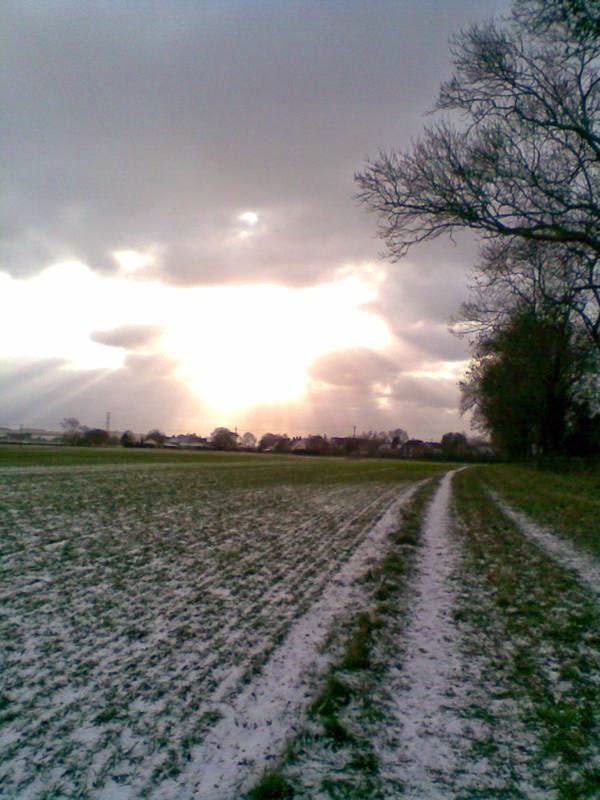
"Tracks led everywhere on the tell-tale white mantle of snow. The roe, the rabbit, the fox and the hare had left their stains. The spoor of pheasant, woodcock and blackbird marked the surface where they had striven for sustenance beneath the snow-covered earth. Below a holly bush, where snow had not penetrated, the tiny wren, his tail cocked upright, flitted about amongst the leafy carpet. At the eastern end of Blackburn Lake the leafless silver birches stood out against the white background like witches' brooms"


So wrote Henry Tegner (1901-1980) in 1953 in his story of a roe deer, The Buck of Lordenshaw.

Henry Tegner was writer, naturalist and a deer expert; president of the Deer Society, firstly gaining his knowledge of deer in Dorset before later later moving to Northumberland. Here he continued his work from the village of Whalton near Morpeth.  He wrote 25 or so books, primarily centred around the Northumbrian landscape and the wildlife that it contained. The Buck of Lordenshaw is as far as I'm aware the only life-story of a deer that has been published. His description is as mesmerising and evocative as other more familiar works about a single species, such as Tarka the Otter and yet this life and death struggle of a roe deer in and around the Cragside Estate near Rothbury is largely forgotten. As is this wonderful author.

I have a first edition copy of that book next to me as I write, and flicking through the pages I am drawn back again to that part of remote Northumberland. This week in Somerset winter has finally showed it's first fingertip grip on a mild autumn, a light frost covered the fields. December next week yet snow, significant snow, seems far off. However Tengers words on the page I am looking at, transport me back to an often taken woodland walk in winter.

"Silence reigned over Cragside save for the soft whisper of the snow as it fell upon the fir tree... It intensified the boundless silence of the whole countryside".


It is a silence I remember fondly and hope to relive again this winter. Many is the time I have walked in the winter wood. Snow knee deep at the woodland edge slowly thins as I push forward past long dead summer vegetation into the corral of trees around me, into a silent world. Is the countryside silent? Muffled maybe. Snow provides the silence of the wild, save for the crepe and scrunch of boot on snow, a tactile satisfying sound no other substrate can mimic. Tread gently and my foot silently sinks into the opaque void, but, apply a little pressure, and the tell tale crepe of compressed flakes brings joy to my activity.  

Crepe, crepe, crepe my footfall softened. I hear my breath leaving me, billowing in a condensed cloud as I move. I am removed from the ground I walk over, soft snow obliterates form and shape, all is uniform, all is silent. I stop and listen. Nothing but silence. Nothing but the thick curtain of trunk and branch, dark against the pale sun bleached winter sky. The dark wood is silently observing me, and at leisure for the first warming rays of April sun. Then these woods which now sleep a deep midwinter's sleep will awaken to spring's choral, the willow warbler, the pied flycatcher, the chiffchaff and redstart will jostle for song borne soundscape.

Today though I am remembering the joy of a wood in winter, I revisit to a silent world, lost in thought, my stride is measured and steady. Lost in my own thoughts, time stands still, yet it has begun to snow, softly. Single flakes breakthrough the canopy mesh to float silently and alone to the woodland floor. I watch them, spinning in unison before being absorbed into the snow-mass within. Without, a heavy fall has begun, dark clouds against the white landscape, swirling flakes coating the trunks of the outermost trees. But, inside the womb like cavern of a winter wood, single flakes gentle fall, in silence. I catch one in my gloved hand. So light, so delicate yet in a moment it is gone, returned to its liquid state by my internal heat.

Light is fading now, I retrace and make my return across the fields. Illuminated from below, the landscape has a pearlescence to it,  unique to a winter snowfall. Even indoors the radiance of light from below adds a glow to a room that even without looking will confirm that indeed snow has fallen overnight. That terra firma pale glow extends dusk well beyond its scheduled timeframe. A buttermilk glow may further brighten the west sky. No torch is required to light my way home today. 

Trees silhouetted against the fading light stand isolated in the white of a countryside at sleep. Maybe a robin will break my reverie as the smoke of a cottage fire drifts listlessly up into the falling flakes.  The pheasant metallic nasal call likewise drifts from some unseen hedge, it is a sound of winter to me. The countryside is closing down for the day. Along the field I walk, my face both hot and chilled with the exertion against a cooling air. I'm home, where I shall sit warmly and wish it will all remain as I remember it, for another day. I never tire of snow.


Henry Tegner's daughter Veronica Heath carried on his country diary traditions and wrote for the Guardian for 35 years. In one of her last postings she recalled 6 of her personal favourites. For me, reading Henry Tegner's simple description of the silence of snow, did what all good country writing aspires to do, to simply transports memories into a clear view, the natural elements, the suggestion to a spirit of place.


Images: Top to bottom:
Fallow Deer - Stock Gaylard Estate, Dorset 2007
The view from my home-office over to Wales 2011
The big field, East Grafton, Wiltshire. 2010
Through the hedge, Somerset 2012
Julie's Tree, Wilton, Wiltshire, 2011.

Friday, 3 October 2014

October 3rd 2014 - Great Tit and W Percival Westell

 
Working at home as I often do on a Friday brings with it many advantages. And of course many distractions to overcome. However today my ability to overcome this particular distracting great tit at the feeders was weak. It is a long time since I've used sunflower hearts at the feeders but the change in species has while not dramatic, been noticeable. Mixed seed, peanuts and fat balls are in constant supply here for the 40 or so house sparrows that make my garden (and roof eaves) home. Their antics are a joy to behold. However last weekend I decided to fill one of the feeders with sunflower hearts. Since then a number of blue and great tits have come back into the garden, providing a welcome (and much quieter) avian distraction.
 
 
It was lucky I had the camera to hand to snap that image of a sunflower pinching great tit. A moment caught forever. At this time I was taking a photograph of this book, bought for me by Julie yesterday from Great Bedwyn Post Office second hand stall. It is a great little book, well used it has to be said,  but it reminds me how far we have come in terms of identification aids. This reference works to British Butterflies and Moths by W. Percival Westell was first published around 1925 (I've failed to find an exact date) and I love books from that era. Simple black and white line drawings of the moths and butterflies he describes in summary detail, a far cry from the HD photographic images we can all access in 2014. Yet 90 years after publication these books are as valuable now as they were to the budding naturalist then. True some of the information has been superseded and updated, but these books provide a historical bedrock to what was happening in the British countryside between the wars, when the second wave of amateur naturalists swished butterfly nets across a meadow tall.

 
I'd heard of W Percival Westell but knew very little about him. So, after some internet research, I discovered that he was born in 1874 and was the first curator of the Letchworth and District Museum and Art Gallery in Letchworth, Britain's first Garden City. This Museum housed the artefacts of and was dedicated to the natural history of North Hertfordshire, including the famous Black Squirrel. Westell was appointed Honorary Curator in 1914 and remained there until his death in 1943. Whilst there he became a prolific author of nature works and in total wrote 84 books and gave over 100 radio talks on the BBC mostly covering the natural world.
 
For such a prolific author and naturalist there is very little information out there. I have though found his autobiography on-line from 1918;
 
 
I feel a winter project coming on to discover more about this Letchworth naturalist. It is amazing what happens following a £2 book purchase.

Saturday, 20 December 2008

A Christmas Message

As this is my art (in all permutations) blog, I thought in the spirit of those dratted round robins we all receive, I'd post my own RR, as an antidote to the Credit Crunch.
~~~~~~~~~~~~~~~~~~~~~~~~~~~~~~~~~~~~~~~~~~~


Well I can safely say this will be the last Christmas message from me for 2008. Is it really only a year since one of my Round Robins floated effortlessly onto your doormat? Well actually it’s three years. So much has happened in those 3 years I’m at a loss to know what to put down on paper, therefore I won’t. But to outline the whirlwind lifestyle of Border Reiver, that well known socialite, the following diary excerpts will add warmth to any cold winters day.

Monday:
The books (not to mention the glossy magazines) say Christmas is a time to reflect, sit back, unwind a bottle and send someone a friend. But is it me? Christmas is getting just far too hectic. What Credit Crunch? The shopping Malls are heaving. Today I found myself having to queue for at least a minute while buying some Sellotape to wrap my presents. It’s a tradition of mine to wrap and send myself a present. Always better to receive than give. After that dramatic episode which saw me seething at this monstrous delay as the woman in front of me bought 3 stamps, using cash of all things, I had to return home.

Actually I had to return home as the 4pm curfew came around quicker than I’d planned. If I’m not home by then the tag I am now required to wear doesn’t half set up a din, and at a frequency which seems to attract cats. Never again will I believe a Polish immigrant that the Afghan he had with him was allowed to remain in the country. It looked such a lovely dog to me as well, or at least that’s what I told the authorities as they entered the transit van at Clacket Lane Services. Mind you being indoors all winter has its advantages, as I’ve done all my Christmas shopping on-line this year. Don’t expect anything though, as the one day I did leave the house (to buy Sellotape) the post arrived. Not being at home the card which was left for me said I have to collect my purchases from the sorting office which is only open..... you can probably see where this is going?

Tuesday:
Decided to deck the halls with holly. Given I don’t actually have any holly, or a hall, I made do with some driftwood and tinsel around the shed. I have to say it looks tremendous. Later I headed out into the front garden to wrap my new outdoor lights around a tree. These 150w fox-lights have the ability to light a runway and with 200 on the string, a long runway at that. So I was especially keen to get them in situ soonest and then all my neighbours could enjoy the spectacle. It didn’t quite work. On the box it said a 6m cable from plug to first bulb. Smashing I thought, more than enough for my needs. What the box failed to say was that at the 6m mark lurked the “interface” box (which allows various animated illuminated light displays) which must not be left outdoors. Is it me, but surely outdoor lights are not meant to begin indoors. Anyway I muddled through and now sit watching Emmerdale wearing sunglasses, until that is the next phase of the light show plunges the house into darkness momentarily. Fantastic.

Wednesday:
Christmas is always the time for having the house lit by candles. There is something magical in the warm glow candlelight provides, and the seasonal treats of stubbing one’s toe or maybe ricochet a shin off a coffee table while trying to find the remote control in the gloom make this time of year so pleasurable. This year’s Advent Candle is providing much needed entertainment. In my youth such a candle would burn quietly through the relevant days, no bother. What on earth is this one made of? In glorious red, it is the shape of an elongated pyramid but just refusing to budge past day 12. I had it lit for 48 hours last weekend and only half of number 6 succumbed to the flame. However the table it is on now looks like an extra from a Sweeney Todd play. Considering the candle is getting no lower, where on earth is this wax coming from? Fetching brown paper and an iron to remove the wax from the carpet, I tripped on the flex went a right old perler into conservatory. Olympic gymnasts would not provide such an acrobatic spectacle. Words were said while I staunched the flow of blood from my nose. I’ve decided to leave wax on the carpet as a Christmas decoration. I’ll stick a sprig of holly in it, no one will notice.

Thursday:
I’ve been neglecting my wildlife blog; such has been the excitement of this week. Today saw the 1st anniversary of my blog, which seemed to pass-by the newspaper headlines. After posting a journalistic tour d force, I waited with baited breath for my legions of fans to post comments and best wishes. There was obviously some sort of internet problem, no other way to explain the lack of replies, so I brewed myself a cup of tea. What is it about tea, we English cannot survive without it? The slightest mishap and out comes the caddy, kettle boiled and away we go, all the problems of the World solved in one cup. I’m always amazed where the stuff I write comes from. I seem to have a very fertile imagination, and certainly most of the comments I receive seem to confirm it is mostly unbelievable. Sent myself a comment anonymously, this may start the ball rolling.

Friday:
Still no comments on the blog. They must all be out Christmas shopping. Following a walk along the beach to blow off a cobweb or two, returned to write my Christmas cards. Before this can happen I had to print them off. Simple job, select a photograph, print it onto card, sign card, pop into post box. I bought a new printer in the autumn, which is singly unable to print anything sensibly. All looks stupendous on the screen, press print and some other highly amended version of the article emerges. It’s all too much, I can feel my blood pressure rising. I may pop to Lidl and buy my cards instead. One version in particular was, very artistic. Somehow orientating itself NE/SW on a card it managed to avoid the entire photograph, printed the text on the back, twice, and somehow added some characters from clip-art. Mind you having said that, it looked far better than the original.

Weekend:
Is finally upon us. Time for a rest and put my feet up. First though I had to nip to the recycling centre to remove the mountain of scrap paper I seemed to have developed since yesterday. Piled alongside the candles, it was a bit of a fire hazard. It was while at the tip, I fancied a poached egg on toast. Returning home a friend popped in so we unleashed the free range into the pan. Lo and behold, a double yoker, it’s years since I’ve had one. This must be a symbol for the coming festive season. The symbolism of this egg wasn’t lost on me, went down a treat, with some tomato sauce. Great Stuff!!


I feel much better now, so with that I’ll wish you adieu Mon Ami, all health and happiness for 2009, a wonderfully happy Christmas and of course leave the washing up to Santa and the little elves!
And don't forget to watch Santa on his travels from this website. But only on Christmas Eve