A

A
Showing posts with label Rain. Show all posts

Tuesday, 15 September 2026

A Falling Emotion : Simply Rain


A wet Northumberland National Park, viewed from our house in Harbottle.

I walked through the woods. Above, the high canopy drenched by September rain, below, little fell on me, though underfoot the soil quietly yielded to my step, a sensation I'd not experienced for many a month. These woods were redolent, an atomised perfume of emerald moss, of burnt sienna earth, of invisible mycelium. I wandered without purpose or direction until arrested in my reverie; there on the floor, glistening as if a shining beacon, a tree stump enveloped by coral fungus irradiating the most luxurious of orange in the half light.

That encounter was during an impromptu walk in East Harptree woods in the Mendip Hills in Somerset, having arranged to meet a friend for what was described as an amble with cake and a coffee. It has been so far well documented that 2026 has been the warmest, and possibly the driest, summer for decades. After over three months of dry weather here in the South West, the arrival of rain a few weeks ago was both unfamiliar and welcome. Soil remained iron-hard after those initial showers, but here, last weekend, high up on the Mendip ridge, after a few unsettled days, the soil was finally beginning to compress under my weight. Subtle, welcome and above all something to celebrate.

The change has been rapid. For months, I, along with most of the population of England and Wales, woke to strong sunlight, warm mornings, hot afternoons, nighttime too warm to sleep, with the prospect of the same tomorrow, the next day, and the next. And then, it rained. Referencing my diary, I noted 'It rained overnight. Don't get too excited as it was just enough to moisten a postage stamp.' It was the 18th of August. A few half-hearted showers arrived over the following days, but persistent rain only began on August 27th. 'It poured overnight. That is the second night running that we have had heavy rain, yet by morning you'd be fooled into thinking no rain had fallen, save a tell-tale dampness on the lawn'. Therefore, walking woods in the Mendip's during the steady rain of Sunday, September 13th, was a delicious novelty.

It was a meeting of literary minds which prompted me to mull over what rain actually means to me. I attended an Edward Thomas Fellowship walk two Sundays ago, bizarrely, in terms of my present thoughts, taking place on a gloriously warm and clear blue sky day. Thomas wrote a number of pieces about rain. One, simply titled Rain, poignantly contemplates mortality during WW1. However, in 1914 he wrote After Rain, recalling a sunrise illuminating a rain-drenched Hampshire hanger in winter; the poem begins,

The rain of a night and a day and a night
Stops at the light
Of this pale choked day. The peering sun
Sees what has been done.

I absolutely understand this sense of ending and beginning only too well. Love it or hate it, rain has that ability to reflect the mood, to enhance the scene. I've experienced that emotional uplift rain has given me since childhood. There is often a clarity created over a landscape when rain finally ends and, if lucky, the sun emerges, a sentiment Thomas brings to the end of the poem:

And on each twig of every tree in the dell
Uncountable
Crystals both dark and bright of the the rain
That begins again.

For me, with the all too logical background of a science graduate, rainfall is merely the rules of chemistry. I know it is simply two chemicals combining to produce water, add a little meteorology, the evapotranspiration and the water cycle of schooldays, but then therein lies the unfathomable kaleidoscope of emotional connection which has captivated me since childhood. It is the sound above all else which I enjoy, or is it the sight? Samuel Taylor Coleridge captured what I am trying to say in one of his notebooks. On October 21st 1803 he wrote:

    'Friday Morning. – A drisling Rain. Heavy masses of shapeless Vapour upon the mountains [O the perpetual Forms of Borrodale!] yet it is no unbroken Tale of dull Sadness...  a gleam of softest light, that brought out the rich hues of the late Autumn… the Birds are singing in the tender Rain as if it were the Rain of April, & the decaying Foliage were Flowers & Blossoms.'

A Romantic Poet view of rain indeed. Yet, how many times have I myself observed 'Heavy masses of shapeless Vapour upon the mountains'. Living for over three decades in Somerset, mountains are distant, but still, if I travel to an upland area, I am transfixed by those scudding clouds which caress the tops, often travelling quickly uphill through a gulley propelled by up-draught air. Technically, this is known as orographic lift, the clouds forming when moist air rises and the dew point is reached. But emotionally, these are fascinating connections to nature.

I experienced this only a few days ago on the Quantock Hills. Walking steadily upwards from the lower slopes, the views towards Exmoor were far-reaching and spectacular. Before long, gossamer clouds began to chase my route. Long before reaching the trig-point at the summit, I'd entered thick cloud, visibility reduced to a mere metre or two, everything, including me, coated in a fine confetti of mist. Hundreds of cobweb hammocks, now visible, glistened amongst yellow gorse flowers, strange disconnected sounds reached me, a raven, a stonechat. Neither seen. A distant steam train whistle shrilled its passage. Everyday life below, yet, on this ridge, I felt alone, abandoned, but intimately connected to this mass of vapour swirling quickly around me. Low cloud is, of course, not rain, not the rain we think of, the energy of condensation overruled by the pull of gravity.

Rain seemed to dominate my childhood. My mother bought a static caravan near Rothbury in Northumberland in 1971. Our very first night sleeping there was the eve of my seventh birthday, and we woke to rain. It rained a lot there. To this day, if I hear the percussion of rain on a metal roof, I'm instantly transported back to sleeping in our tin box. I was a self-contained only-child and allowed to free-roam the surrounding countryside. I would walk the banks of the river Coquet in all weathers, but it was the wet weather which excited my senses. Raindrops on grass could be flicked into the air as I passed. Few people ventured out during the rain, I was alone in nature, I was happy.

Much later, when at their lowest population ebb, I spent a couple of years surveying otter activity along the Coquet for the then Nature Conservancy Council. And, while I never saw the animal here, only signs (I had to travel to Skye for views of otter), memorable days were spent watching wildlife, often at dawn and dusk, often in rain. Here, without realising, I absorbed the knowledge of the sound of rain. Heavy rain on a sycamore leaf has a sound altogether different to heavy rain on the water. Light rain dampens the soundscape. Rainfall, scurrying wind chased across the landscape, has a sound altogether different to incessant drisling, as Coleridge called it. Summer rain is different, often subtler and short-lived, to winter rain with its harsh symphony and darkening sky. 

Summer rain can be cruel.  At fifteen, I spent my six-week school summer holiday working on a hill farm near Glanton in Northumberland. I was due to move there as a student the following June. It was a wet year and, try as we might, the hay crop could not be brought in dry. I can still hear the sound of mini-waterfalls cascading from the broken gutters of the barns, down into pools of water below. Everywhere was wet, yet, in an odd way, I loved it, possibly as, at that age, this was simply one big adventurous step in my chosen career, and not the anguish of a farmer surveying a ruined hay crop. And still, nearly fifty years later, I enjoy rain. 

Only this week, unable to sleep, did I sit in the conservatory at night listening to the sound made by rain falling in the garden. Hopefully, the hedgehog discovered that same day asleep in our compost heap, woke to rain and a smorgasbord of slugs that night.

I enjoy walking in it too. A few years ago, I took myself for a Sunday walk along a lane during heavy rain, well protected by my favourite Barbour coat and hat. A Land Rover pulled up, one of the local farmers offering me a lift to 'get out of this horrendous rain'. I declined his offer, stating I was enjoying the experience. I well remember his quizzical look as he closed the door and drove off into the murk. Penny for his thoughts?

But what of rainstorms? These high-energy fleeting moments of deluge are fascinating to watch, to experience, to read about. I've long admired Thomas Hardy. His description of the Wessex hinterland resonated with me as a teenager, and it has never left me. Hardy provided the perfect metaphor of the destructive powers of a summer storm in the heart of his heroine in his book Far From the Madding Crowd. Firstly, as steadfast unrequited Gabriel Oak noticed, a storm approached unprotected ricks during Bathsheba's wedding night. 'He was disturbed in his meditation by a grating noise from the coach-house. It was the vane on the roof turning round, and this change in the wind was the signal for a disastrous rain.' Oak having thus saved the harvest causes Bathsheba to reflect on her choice of husband. Later, that same husband, Sargent Troy, having rejected Bathsheba, despairs over the destruction of his true-love, Fanny Robins' grave, by rainwater falling seventy feet from the church tower. 'The persistent torrent from the gurgoyle's jaws directed all its vengeance into the grave. The rich tawny mould was stirred into motion, and boiled like chocolate. The water accumulated and washed deeper down, and the roar of the pool thus formed spread into the night as the head and chief among other noises of the kind created by the deluging rain.'

Summer thunderstorms seem less present in Somerset than of late. I so enjoy that feeling of tempestuous wind, noticed by Gabriel Oak, which often chaotically precedes the deluge, which when it arrives can be deafening, and if falling on parched summer earth accompanied by a unique aroma I struggle to describe, earth mixed with the scent of new lain tarmacadam almost suffices. One of the people I met at the Edward Thomas walk was Roz Brady. I've been reading some of her exquisitely crafted nature writing on her website. She writes outdoors and beautifully describes in Pudsham Meadow through the Seasons – A Wild Writing year (1), a storm blowing over Widecombe... winnowing summer's growth and ushering in a landscape of winter. 

All of which reminds me that while I have been writing this, I can hear steady rain falling once again. Writing about rain is one thing, but while it lasts, like Thomas, like Hardy, like Coleridge, like Roz Brady, I need to get out there and experience... Rain!


Dorset, January 2026


(1) : Roz Brady website : www.rozbrady.com

Monday, 13 November 2023

A Plodge Around Frampton Cotterell's Nature

To Plodge - Verb (intransitive) - to wade in water, esp the sea. Northeast England dialect. 

Well, I found myself a long way away from the sea on this Remembrance Sunday, but I and my two companions were definitely plodging - such a great word PLODGE - a word I grew up with and a word which sounds like the very action it describes. And on this visit to Frampton Cotterell we did plodge with merry abandon. 


A friend of mine has recently become involved with her local nature group in the village of Frampton Cotterell. The village itself is a handful of miles north of Bristol in South Gloucestershire, and as such like many communities across the land which now find themselves hard by major cities, its countryside is under pressure to develop.  Partly due to this threat of development and partly to enhance the natural history value of the area back in 2021 a new nature group was formed Frampton Cotterell Nature, and my friend Sheena found herself on the committee.  Over the months she has mentioned snippets of news from this group while we've supped a coffee or I've read the updates on Facebook, but until yesterday I'd not visited any of the sites they oversee. We therefore arranged to pop up yesterday and as had happened with recent nature rambles this autumn it was raining. Mrs Wessex-Reiver joined me.


As Ovid said "Fortune and love favour the brave." Thus despite the predicted deluge with stout wellingtons now on our feet and a waterproof mackintosh on our backs we set off from Sheena's house, gaily splashing through the village before we joined the Frome Valley Walkway at the first of the sites now managed by the group. Sadly I've forgotten what this area was called but it followed the banks of the river, is open access to anyone and in recent months has seen tree planting and management take place to enhance nature here.

Not a long river, the Frome winds its 20 miles from a little further north at Dodington and eventually spills itself into the mighty River Avon at Bristol where it ends its days at the Bristol Channel flowing past the aptly named Avonmouth.  Here at Frampton Cotterell I was informed it was usually little more than a big stream, though today after a lot of rain recently it was a boiling coffee coloured river in full spate. Kingfishers are resident here though with the river in such force they'll not be able to fish, kingfishers can suffer high mortality at times of flooding for this reason.  Further upstream otters are found. A pleasant enough start to our walk though in November the wildflowers have sensibly disappeared for another year awaiting warmer days.


A little further on we came to a small wooded area where a few weeks ago a working party had been invited to come and do some coppicing one morning. This little parcel of woodland had been coppiced before but not for a long time. On that coppicing day my friend turned up as did the organiser and that was it. However hard they tried two people can not do much coppicing over a morning and as we stood there our discussion ranged on how few people turn out to planned working days despite a lot of people showing interest and enthusiasm. That is a perennial problem with many nature organisations (and not just nature groups) where often it is just a few people who do many of the tasks and become the stalwarts of any group. But where are the rest of the volunteers, especially if as I learnt the nature group have 750 followers on social media? There's also an age issue, many work-party people are retired, which of course is due to working people not having time, so we discussed how the nature group could maybe encourage families, or school groups to come along. Or just anyone. It's a universal problem. Hopefully they'll get a few more helpers on the next coppicing date whenever that is.


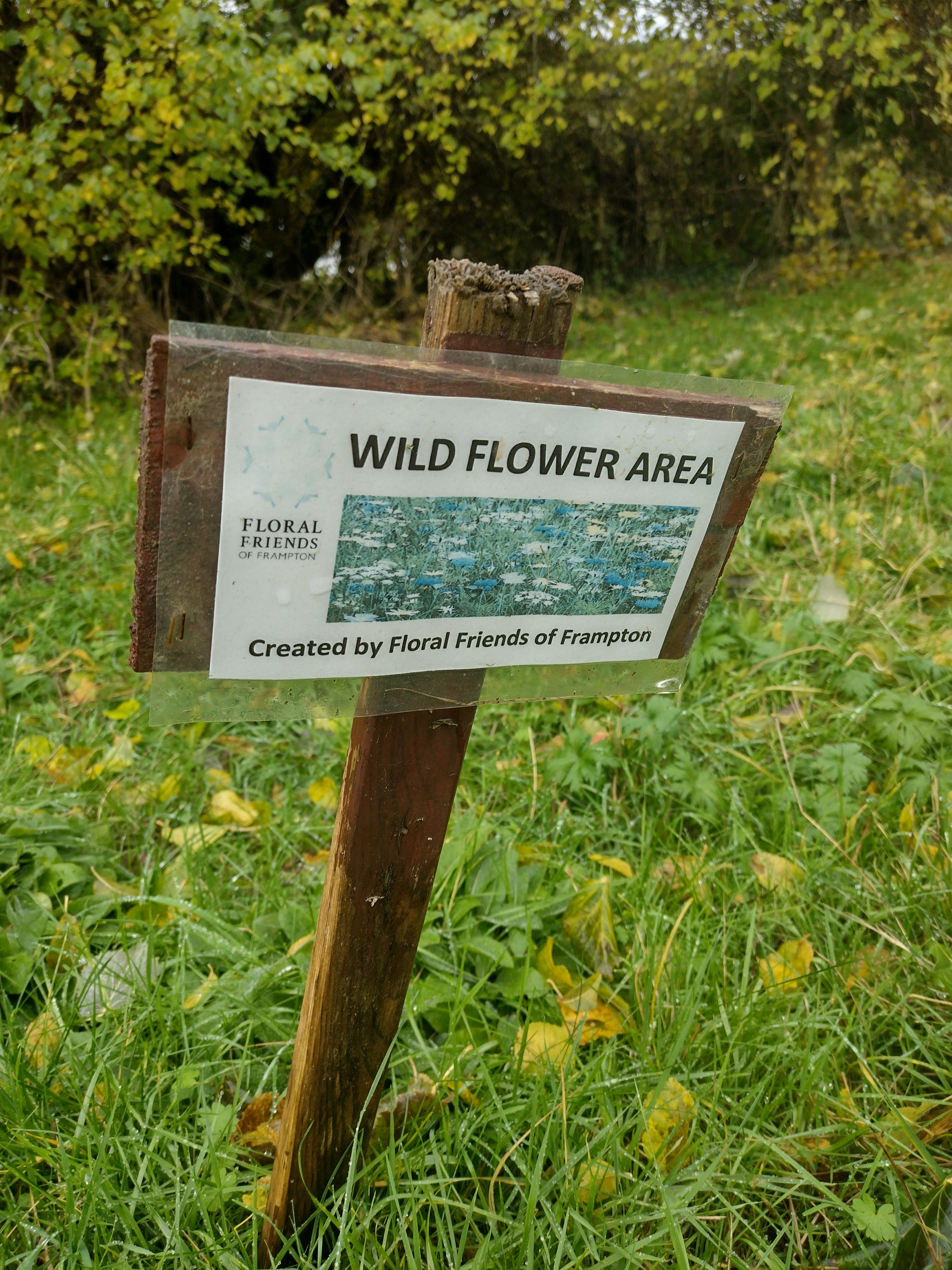
Emerging from the coppicing woodland the valley opened up again with sodden remnants of flowers hinting at a beautiful wildflower area in the summer, an area which seamlessly transferred into a small orchard where anyone can come and pick the apples (a local jam maker is particularly fond of these).  This is exactly what a locally managed site should be, owned by the Parish Council, managed by locals, for locals with specific tasks and need targeted by those locally on the ground.  Oddly as we were walking along the river banks of the Frome, here at least the ground underfoot was quite dry, which lulled us into a false sense of security.


Crossing the main road and circumnavigating the boundary wall of St Peter's church we wandered down Mill Lane past some allotments through a kissing gate and into another Parish Council owned site, Centenary Fields. The nature group looks after a dozen or so sites, however this Centenary Fields,  which opened in 1994, is arguably the focal point of their operations as aside from its size, it is slap bang in the middle of the village. 


In the summer I was told a family music festival takes place here but for the rest of the year it is an open area for dog walkers, families, nature lovers and anyone who just wants to use the space. A lot of tree planting has happened here and on the day before we visited a working party had begun to dig out a wildlife pond (complete with a dead hedge) which despite not being complete was already filling up. 


Moving from the pond we were shown a newly planted woodland area. This resulted in an interesting discussion about plastic tree guards, something I have a particular loathing for. I spotted a mature tree close by that still sported its tree guard and discussing with my friend, try as we might it could not be removed with the bark now fused into the plastic. It is a true oversight of many a grant application that money is there for planting, often insisting on tree guards but no funds for aftercare or even the removal of the guards after a few years.  Not far away a native hedge had been planted by a private landowner without tree guards being used. As if to rub salt into the wound these unprotected hedge saplings looked really healthy.

The brilliant naturalist Chris Sperring has a much simpler, and bio-DNA-friendly way of regenerating trees in open public areas  - brambles. By encouraging brambles, themselves excellent for many wildlife species a native and locally adapted succession occurs. If left unmanaged he argues grassland first becomes brambles, eventually some shrubs develop both providing super habitat for many birds and mammals before the odd tree seedling from local trees naturally regenerating pokes its head up above the bramble tangle, a tangle which by its very thorniness is protecting the young tree from deer or other browsers thus doing the job of plastic tree guards for free. Eventually these saplings will grow, form a canopy and as they mature so the brambles' vigour is reduced due to reduced light levels reaching the understory and eventually many of the shrubs and bramble disappear leaving a young woodland. No need for planting, tree guards, or fencing, or money being spent, with a natural succession from open ground to woodland happening at a rate other species can adapt to. Sadly though this succession can take 30 years and humans being humans crave an instant hit, so we manage and plant and add tree guards.


As we walked on the countryside was beginning to open up into agricultural land. Passing through another kissing gate we came into a pony paddock which would be perfect for many species having shrubs here and rough grass areas there but I learnt it is possibly going to be offered up for development. We walked on towards a local well known spot called Black Rocks where the river Frome was hurling itself around a natural bend through a rock cutting. This is a well known spot in the summer used by people just to come and enjoy a bit of fresh air (and the odd fizzy drink!). 


Onwards we walked now heading into a lovely mature section of riparian woodland where the 'seep seep' of redwing could be heard overhead before crossing a new metal bridge over the raging Frome and onward to the other side where we emerged onto Somme-like agricultural land where maize had just been harvested. We were still following the Frome Valley Walkway and now found ourselves at approximately half way through our planned walk, with our initial plan to walk onto the village of Iron Acton and back to the warm dryness of Sheena's house. However we became bogged down in the quagmire that is the Great British countryside at winter. Welly sucking mud was followed by calf deep puddles, or both, most exciting in many ways but it made onward travel slow and laborious. The countryside around here however was lovely and as it adjoined the Frampton Cotterell nature sites a lovely example of that new thinking of joined up landscapes making for a larger habitat species can move about in. Of course if we stopped developing on land, or reduced the intensity of agriculture we'd not need these refugia areas.


Back to the mud. After I'd moved south thirty years ago my late mum was astonished on visiting Dorset many years ago over Christmas. Up until that point she had only ever visited in the summer when dust devils rose from the hot baked earth of Hardy's Wessex. As we three yesterday plodged along this Gloucester footpath I thought of mum all those years ago astonished at the rivers of water rushing down country lanes or spilling down tracks. The countryside is nothing if not muddy in winter.  

There is also increasing evidence that being close to mud is beneficial to our health. In her book 52 Ways To Walk, Annabel Streets discusses the benefits of mud, especially a microbiota  butyrate which is meant to be good for our gut fauna. Another substance geosmin is known to induce feelings of calm according to evolutionary psychologists. But that aside there is however something very satisfying in squelching through mud on a walk, though as we were concentrating so much on where our feet were treading spotting any of the limited wildlife on show was a challenge.  

Sheena pointed out she had done this route back in May while on a dawn chorus walk when it was a lot drier. The nature group itself have now counted over 80 species of birds in the area which is encouraging for a farmed landscape. On our visit in the flooded fields to our right gulls were afloat on the temporary lakes while rook, jackdaw and carrion crow circled about, and the chatter of smaller birds helped lift the spirits.


Eventually we reached Hoover's Lane and faced a choice - straight on took us to Iron Acton through more fields or turning right took us back to Frampton Cotterell along the very flooded looking lane.  We decided on the latter option, not least as we were tiring a little with all this plodging, had begun to resemble drowned rats plus we craved a light refreshment. The unmade lane back was easy to follow but badly flooded along most of it's length, at one point the water was almost up to the top of my wellingtons. This was becoming quite an adventure, maybe next time I'll wear some chest waders. 

The lane though was interesting, a lot of mature hedge trees and at one point I heard the pip pip contact call of a great spotted woodpecker just moments before it flew off, thankfully seen by both Sheena and Mrs Wessex-Reiver. I learnt that all the land to the right of us was under threat of development. Nothing decided yet but the pressure was on, and that is a worry for the nature group. But I can see why this land has potential for housing, large flat fields, next to an arterial road into Bristol, itself only half an hour's drive away as the advertising might say. In reality I discovered even now at rush-hour it can take an hour and a half to reach the centre of Bristol, just 8 miles away.

Onward we walked as the rain really did begin to intensify until finally arriving back in Frampton Cotterell, two hours after we set off and having walked 3.4 very wet miles. The hot chocolate and sausage roll in the village farm shop was most welcome after that.

Despite the rain, the flooding and the mud we had an excellent visit.  Admittedly not the best day to take onboard the results of what this local wildlife group are doing, or trying to do, but with those 750 members of the Facebook site onboard, even if just 1% turn their interest into action they'll build up a loyal following and I hope they succeed in improving nature abundance and biodiversity in and around their village. I will come back in the summer when it is hopefully a little drier and see what it looks like when the various shades of brown under a leaded sky have departed.

Frampton Cotterell Nature Blog - further reading;

 https://framptoncotterellnature.wordpress.com/about/


Friday, 14 October 2022

It is strange seeing rain again

It was reported on the BBC News website today that the summer of 2022 will go down as one of record breaking temperatures. This report by the Met Office doesn't mention the lack of rain, July was the driest since 1935 in England. 2022 was very dry generally in England especially, yet as I write this outside it is pouring. For the first time in months it feels cool, autumnal and damp. And that is something to celebrate.


In that BBC News article it states the following,

"More than half of the UK's oldest active weather stations recorded their hottest day ever in 2022, according to Met Office data."

Adding;

"The new UK high of 40.3C was recorded at Coningsby in Lincolnshire on 19 July 2022."

Like many I remember that first heatwave very well, and the one which followed in August. Looking back in my diary, I note that on July the 17th I wrote 

"First hot day. It was cool at 7am, by by 10am we could feel the heat building...... curtains drawn windows closed we remained indoors until 10pm ... when [we] watered the garden in the darkness"

I remember sleeping outside at night, a pleasant experience lying there watching the stars and night sky yet warm enough to be comfortable. The heat was intense but it was bearable as the landscape was so dry, dry heat is so much different to humid heat. It was around this time we spent a few nights to watch nightjars on the Quantocks. Sunset being around 21.30hrs, it was a late few Fridays we ventured there to witness these remarkable birds. I noted at the time the landscape was bone dry. Dust billowed everywhere and the footpaths over the Quantocks were cracked and as hard as stone. Vegetation looked tired, really tired.

The heatwave which followed in early August was not quite as ferocious but lasted longer.  Flicking back through my diary we visited family in Salisbury on August 6th noting that in the afternoon we were exhausted by the heat and the grass around the cathedral was the colour of stubble. The heat built, and continued through to the 14th when for the third day running my car thermometer showed 39oC. Car thermometers are not accurate of course, but nevertheless, even reducing this by a few degrees, it was a hot couple of weeks.

However the following day, August 15th, I wrote. "It was forecast, but around 7am it started to rain - nice light rain, which carried on until lunchtime" 

The previous entry of rain in my diary had been July 2nd and I needed to search back to April to find reference to rain, and only then rain showers. The winter months were no better, January and February in this area of Somerset were dry, but not obviously though as it was cloudy, thick cloud, most days.


As I watched the rain this morning I began to think back to the dry summer, in reality it was only a few weeks ago. It seems odd to be looking at something so common again, but rainfall is so important to everything yet we take it for granted. "oh it raining AGAIN!". As if this was a life and death situation to be avoided at all costs.

Only when the rain stops do we think of how life would be without a steady trickle of moisture through the year.  As we read in news reports this year 2022 was a bad one for wildfires across the Planet, long-term stable weather patterns altered through Climate Change now backed up by science. Locally however the changes are just as evident.

Today as I write this I can see rain falling steadily on a mild autumnal day, but look at the trees, established trees that is. 

Many deciduous trees have shed some of their leaves already. We'd expect this in October as shortening days trigger seasonal change in metabolism and eventually leaf fall. Back in August however a False Autumn occurred in many parts of England. Not something I believe I've ever known before, and it seemed to happen within a few days. When the heat subsided a little suddenly lanes and paths were strewn with crisp shrivelled leaves, often still green. Walking through them and hearing their rustle, was akin to childhood memories kicking leaves about at Halloween. In the canopy, autumn colours mingled with high summer green, while swallows flew overhead. Quite strange. Shedding leaves in summer is of course a way of surviving for a tree, transpiration through stomata in the leaf is a constant which can only be stopped by jettisoning the leaf itself. It is survival. However shedding leave too early is risky. 

Deciduous trees and a few conifers use this year's energy production to lay down next years leaves. Those future leaves are in the buds which remain after leaf fall quietly awaiting a sunlit Spring day to literally 'bud-burst' and begin the cycle all over again. But, leaves falling in August? It is only to hope that those buds formed early too. Failure to provide viable leaf buds this year will mean no leaf canopy next year, or at least compromised cover and possibly a weakened transpiration system. A compromised leaf cover in spring is a problem for the tree but also for the wildlife which relies on that leaf-burst, invertebrates emerge, providing food for nesting birds and the problem expands beyond the canopy.

Next year many trees may well have a decent bud burst from a distance, but is it enough, will the tree actually survive? That is a waiting game that we'll only know next summer. What trees need now is to hopefully gain enough moisture this autumn while setting down their buds, and hope for a wet (or is that normal) growing season in 2023. Of course not all trees are affected as other species. Oaks are fairly robust for a few dry years at lease, whereas beech or birch will suffer quickly.


Today though I just enjoyed going out into the garden in the rain. Garden spider and their webs are everywhere today bejewelled with fine raindrops. The same raindrops making wonderful patterns on the foliage and flowers around the garden. The clover in the lawn was especially uplifting, like a verdant miniature rock concert, everyone having their phones out waving bright lights to show appreciation for the H2O show.

I like rain a lot, and it is good to see it come back into this part of Somerset. Yesterday it felt autumnal for the first time, cool misted vegetation, damp leaves clinging to pathways, pathways that never really dried out in the still quite warm sunlight. I arrived home from work to the feintest aroma of woodsmoke. It's autumn, autumn as it should be. And for that, I like it. Thank you rain, I hope you keep falling and keep life turning.

Sunday, 4 October 2020

The condensed moisture of the atmosphere falling visibly in separate drops.


The Oxford English Dictionary describes rain thus : Noun : 

The condensed moisture of the atmosphere falling visibly in separate drops.

Drill into the scientific literature and rain, rainfall and related meteorological phenomenon are all caught up with the water recycling on Earth that sustains life. 

Or, as I did this October morning upon opening the curtains, the temptation is to close them again and return to the land of slumber, with an improving book. That though is missing the joy of rain. Sunshine lifts the spirits to many; for me rainfall energises. Why? I do not have the inclination to work that out, maybe a deep seated childhood memory, but for me rain and strong winds that often accompany these low pressure Autumnal systems simply energise something deep within, to be creative.

As I write this, the constant chatter of hundreds of raindrops drum out a pattern on the window, a constant musical accompaniment to my muse. For many damp weather brings to them the shadow of melancholy. I am the opposite, hot sunshine robs me of energy, creative energy. And while I do enjoy a summers day sunbathing by the coast, some of my best creative moments have been during tempestuous conditions outside. Whether they be paintings or writing, there is a wrapped up cosiness to rain that chisels inwards into my soul. It is sound. Those many raindrops providing the comforting jazz beat tenor, a rhythm, a beat, a swing to focus my dancing fingers over the keyboard. Wind driven rain blows a faster tempo to the rhythm, quiet moments times of reflective introspection. 

This commentary arose while standing in the kitchen watching Julie planting bulbs in the greenhouse. Waiting for the kettle to boil, that mundane suburbia activity of life support, I watched the raindrops dribble down the glass, reflecting on the scene. Imagery can never recreate this scene in its whole, the frailty of summer scenes being ruled by the relentless weather of change. Wind buffeted in many directions. Raindrops thrown against the pane one moment, silence the next in readiness for the following tumult of precipitative energy. So enraptured became I that I forgot to make my coffee.  This giver of life, a simple dual combination of hydrogen and oxygen elements, brings also the process of recycling. Without rain, all life would stop, birth, life and death, death followed by decomposition in the afterlife, rebirth and reflection.


Thomas Hardy had an almost obsession with this cycle and recycle of life during and after death. Take for example his marvellous poem An Autumn Rain-Scene;  

There trudges one to a merry-making
With sturdy swing,
On whom the rain comes down.

To fetch the saving medicament
Is another bent,
On whom the rain comes down.

One slowly drives his herd to the stall
Ere ill befall,
On whom the rain comes down.

This bears his missives of life and death
With quickening breath,
On whom the rain comes down.

One watches for signals of wreck or war
From the hill afar,
On whom the rain comes down.

No care if he gain a shelter or none,
Unhired moves on,
On whom the rain comes down.

And another knows nought of its chilling fall
Upon him aat all,
On whom the rain comes down.

On the surface here is an observer watching country folk about their business caught up in the machinations of the lead character, rain. Drill down under the surface and Hardy is here covering a lot of ground which creates walks of life. Merrymaking, medicament (medication or sickness), vigour, poverty and wealth, not forgetting melancholy and Hardy's favourite theme death. The poem ends with "knows nought of it's chilling fall". The poem is, for want of a better explanation, a scene from the grave. The six characters are dead and the rain allows the possibly recently deceased observer to assess his, or her own mortality, this day when - knows naught of its [rain] chilling fall.

Hardy repeatedly uses rain as a metaphor for melancholy and death, angst and lost love. It seems logical then that he too was inspired by this atmospheric precipitation falling to earth. I recall reading that triage of unrequited love Far From the Madding Crowd for the first time and being struck by a sub-scene which is one of the pivotal scenes to the novel. Bathsheba's servant Fanny Robin is buried in a paupers grave, however her erstwhile lover Francis Troy erects a gravestone, which overnight is destroyed by rainfall from the church gargoyle pouring onto it. Troy exits left, Bathsheba repairs the grave her ex lover erected for his former lover and diverts the gargoyle. Which love is it, Bathsheba for Troy, Troy for Fanny, Bathsheba for a wronged event the dismissal of Fanny, or just love based on doing the right thing. Powerful imagery the result of raindrops, lots of them.

Currently being repeated on Radio 4 is a factual-arts series called A British History of Weather, with the subtitle "During Wind and Rain". I have been involved with getting this repeat back on air through a little bit of fettling as we'd call it; the subtitle of this 2016 ten part series came from Hardy's own poem of the same name:  

They sing their dearest songs—
He, she, all of them—yea,
Treble and tenor and bass,
And one to play;
With the candles mooning each face ...
Ah, no; the years O!
How the sick leaves reel down in throngs!

They clear the creeping moss—
Elders and juniors—aye,
Making the pathways neat
And the garden gay;
And they build a shady seat…
Ah, no; the years, the years;
See the white storm-birds wing across!

They are blithely breakfasting all—
Men and maidens—yea,
Under the summer tree,
With a glimpse of the bay,
While pet fowl come to the knee…
Ah, no; the years O!
And the rotten rose is ript from the wall.

They change to a high new house,
He, she, all of them—aye,
Clocks and carpets and chairs
On the lawn all day,
And brightest things that are theirs…
Ah, no; the years, the years;
Down their carved names the rain-drop ploughs.

Again we are in the mind of the observer, casting his or her mind back to a happy family. The final stanza is the catalyst to look back, remember those people whose names are inscribed on the gravestones in the graveyard. For that moment in time those who have departed are back with us, flesh and blood, alive and close enough to touch. Much as many of us do today with old family photographs.

Hardy was inspired by many things, with rain used as a metaphor throughout his work. To a much lesser extent rain allows my inner creative, albeit at a village craft tent level, to Hardy's Premier League National Treasure. I've not written for this blog since July, writers block or just laziness broken this weekend by Storm Alex and its thrashing tail of rainfall. That deluge of condensed moisture has recharged my little grey cells and the fingertips skip across the keyboard. The power of rain is amongst us all, I only hope the sun doesn't shine too soon, though when it does we may get a rainbow moment; rain is needed for this too.

Here goes.

There was a young man called Fred,
Through rain and puddles he tread
Wet through he was
Emigrated to Oz
In sunshine he now lays dead.

Friday, 18 January 2008

When is it going to stop raining...

I try to get to Sand Bay before work at least once a week in the winter, but this week it's just rained and rained and rained. Not good for birding and I'm going stir crazy. Even if we had some wind with this rain it'd be exciting, but no, wet, dark, mild and not a breath of wind. Miserable.

On the bright side though, a female Sparrowhawk flew over the car on the way in to work, maintaining the wildlife on the move theme. Which I think gets me to about 72 species this year. However as the list is in Dorset, can't confirm this until tonight.

Finally, just because it's Friday and I should do some work, I thought you'd like this photo, of my father, taken about 3 years ago. We were having coffee in the garden and a racing pigeon landed on him. Stayed for half an hour, we fed and watered it and it left. Birding on the move?