
To Plodge - Verb (intransitive) - to wade in water, esp the sea. Northeast England dialect.
Well, I found myself a long way away from the sea on this Remembrance Sunday, but I and my two companions were definitely plodging - such a great word PLODGE - a word I grew up with and a word which sounds like the very action it describes. And on this visit to Frampton Cotterell we did plodge with merry abandon.

A friend of mine has recently become involved with her local nature group in the village of Frampton Cotterell. The village itself is a handful of miles north of Bristol in South Gloucestershire, and as such like many communities across the land which now find themselves hard by major cities, its countryside is under pressure to develop. Partly due to this threat of development and partly to enhance the natural history value of the area back in 2021 a new nature group was formed Frampton Cotterell Nature, and my friend Sheena found herself on the committee. Over the months she has mentioned snippets of news from this group while we've supped a coffee or I've read the updates on Facebook, but until yesterday I'd not visited any of the sites they oversee. We therefore arranged to pop up yesterday and as had happened with recent nature rambles this autumn it was raining. Mrs Wessex-Reiver joined me.

As Ovid said "Fortune and love favour the brave." Thus despite the predicted deluge with stout wellingtons now on our feet and a waterproof mackintosh on our backs we set off from Sheena's house, gaily splashing through the village before we joined the Frome Valley Walkway at the first of the sites now managed by the group. Sadly I've forgotten what this area was called but it followed the banks of the river, is open access to anyone and in recent months has seen tree planting and management take place to enhance nature here.
Not a long river, the Frome winds its 20 miles from a little further north at Dodington and eventually spills itself into the mighty River Avon at Bristol where it ends its days at the Bristol Channel flowing past the aptly named Avonmouth. Here at Frampton Cotterell I was informed it was usually little more than a big stream, though today after a lot of rain recently it was a boiling coffee coloured river in full spate. Kingfishers are resident here though with the river in such force they'll not be able to fish, kingfishers can suffer high mortality at times of flooding for this reason. Further upstream otters are found. A pleasant enough start to our walk though in November the wildflowers have sensibly disappeared for another year awaiting warmer days.
A little further on we came to a small wooded area where a few weeks ago a working party had been invited to come and do some coppicing one morning. This little parcel of woodland had been coppiced before but not for a long time. On that coppicing day my friend turned up as did the organiser and that was it. However hard they tried two people can not do much coppicing over a morning and as we stood there our discussion ranged on how few people turn out to planned working days despite a lot of people showing interest and enthusiasm. That is a perennial problem with many nature organisations (and not just nature groups) where often it is just a few people who do many of the tasks and become the stalwarts of any group. But where are the rest of the volunteers, especially if as I learnt the nature group have 750 followers on social media? There's also an age issue, many work-party people are retired, which of course is due to working people not having time, so we discussed how the nature group could maybe encourage families, or school groups to come along. Or just anyone. It's a universal problem. Hopefully they'll get a few more helpers on the next coppicing date whenever that is.

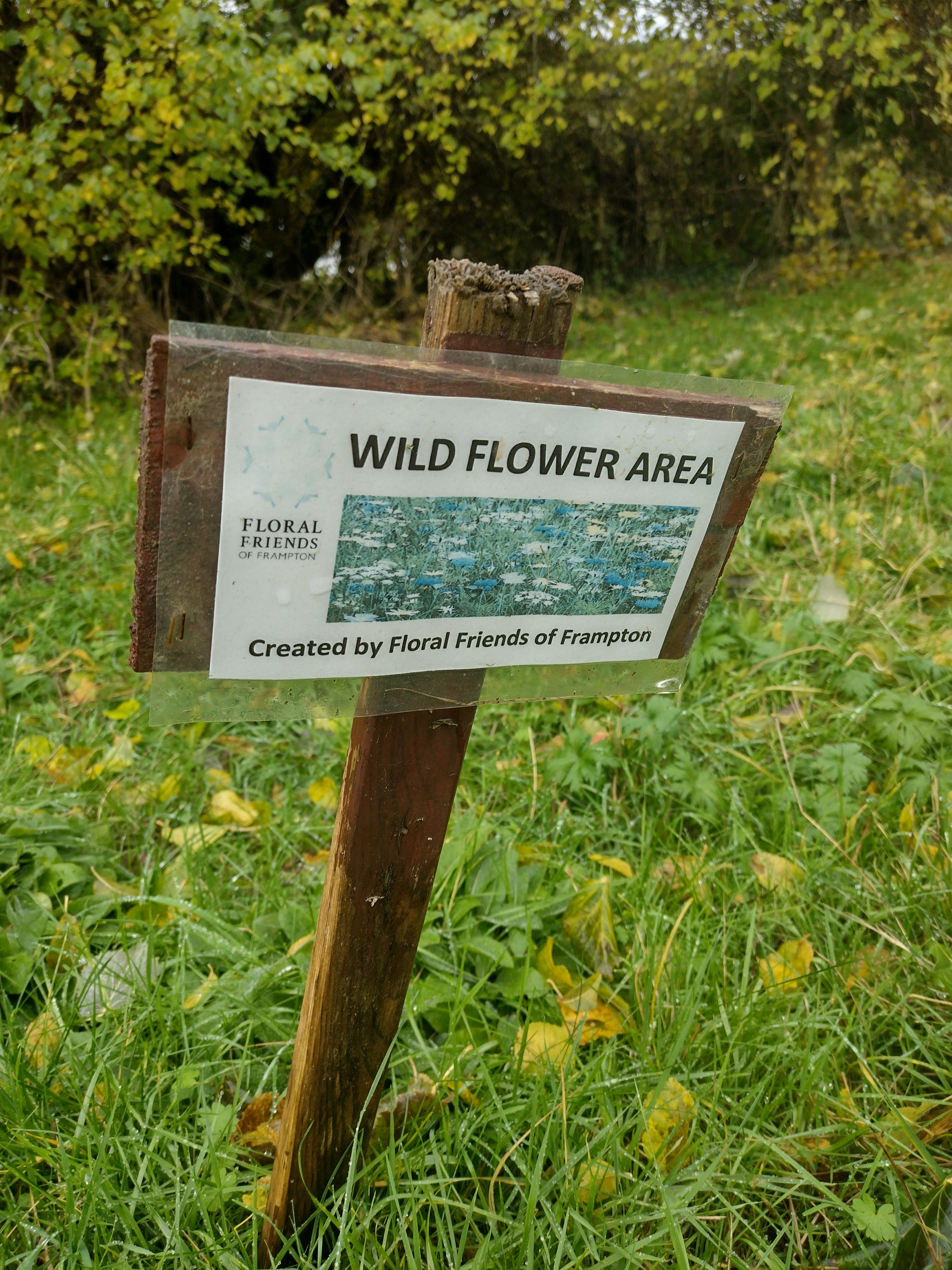
Emerging from the coppicing woodland the valley opened up again with sodden remnants of flowers hinting at a beautiful wildflower area in the summer, an area which seamlessly transferred into a small orchard where anyone can come and pick the apples (a local jam maker is particularly fond of these). This is exactly what a locally managed site should be, owned by the Parish Council, managed by locals, for locals with specific tasks and need targeted by those locally on the ground. Oddly as we were walking along the river banks of the Frome, here at least the ground underfoot was quite dry, which lulled us into a false sense of security.

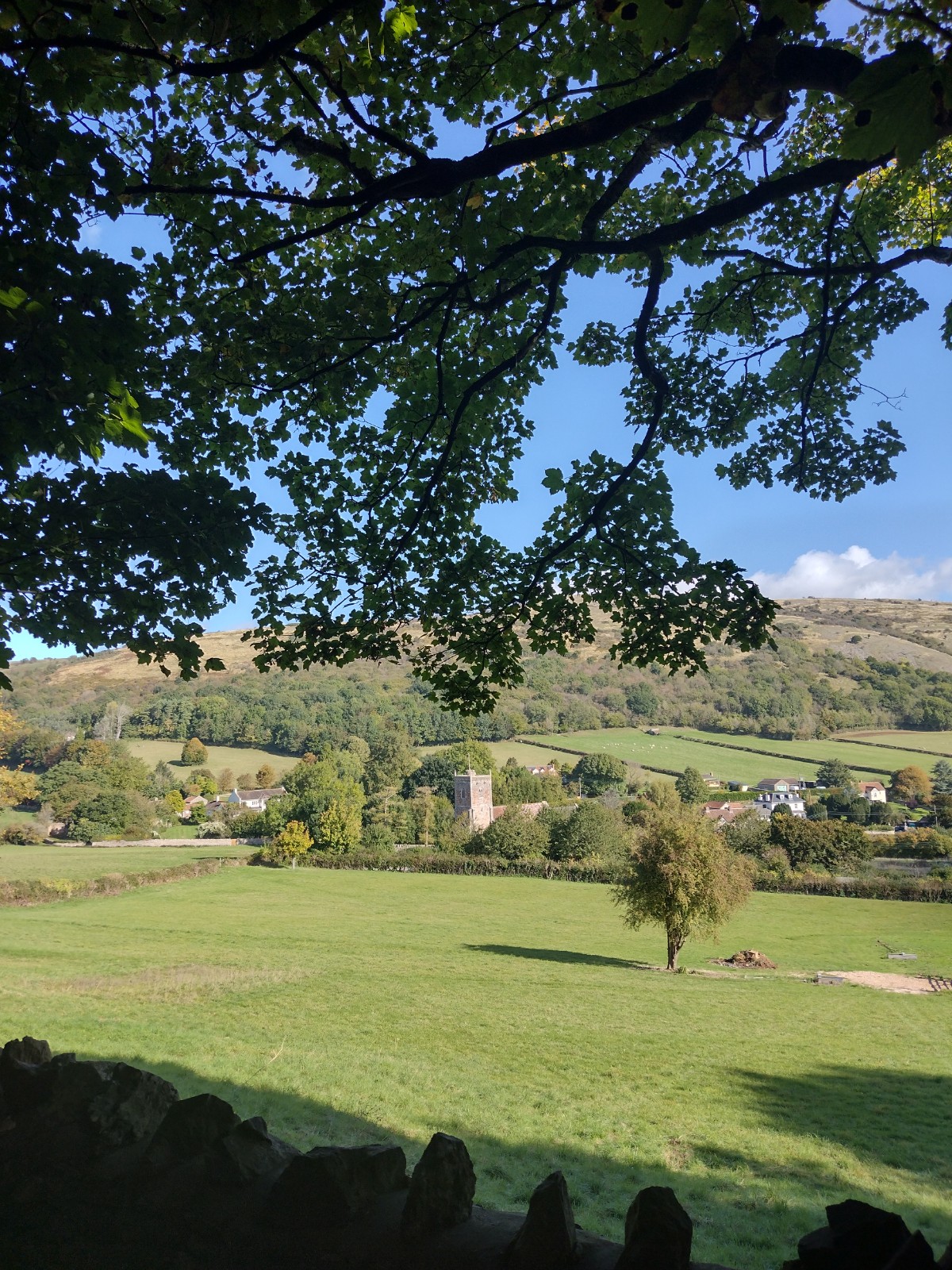
Crossing the main road and circumnavigating the boundary wall of St Peter's church we wandered down Mill Lane past some allotments through a kissing gate and into another Parish Council owned site, Centenary Fields. The nature group looks after a dozen or so sites, however this Centenary Fields, which opened in 1994, is arguably the focal point of their operations as aside from its size, it is slap bang in the middle of the village.


In the summer I was told a family music festival takes place here but for the rest of the year it is an open area for dog walkers, families, nature lovers and anyone who just wants to use the space. A lot of tree planting has happened here and on the day before we visited a working party had begun to dig out a wildlife pond (complete with a dead hedge) which despite not being complete was already filling up.


Moving from the pond we were shown a newly planted woodland area. This resulted in an interesting discussion about plastic tree guards, something I have a particular loathing for. I spotted a mature tree close by that still sported its tree guard and discussing with my friend, try as we might it could not be removed with the bark now fused into the plastic. It is a true oversight of many a grant application that money is there for planting, often insisting on tree guards but no funds for aftercare or even the removal of the guards after a few years. Not far away a native hedge had been planted by a private landowner without tree guards being used. As if to rub salt into the wound these unprotected hedge saplings looked really healthy.
The brilliant naturalist Chris Sperring has a much simpler, and bio-DNA-friendly way of regenerating trees in open public areas - brambles. By encouraging brambles, themselves excellent for many wildlife species a native and locally adapted succession occurs. If left unmanaged he argues grassland first becomes brambles, eventually some shrubs develop both providing super habitat for many birds and mammals before the odd tree seedling from local trees naturally regenerating pokes its head up above the bramble tangle, a tangle which by its very thorniness is protecting the young tree from deer or other browsers thus doing the job of plastic tree guards for free. Eventually these saplings will grow, form a canopy and as they mature so the brambles' vigour is reduced due to reduced light levels reaching the understory and eventually many of the shrubs and bramble disappear leaving a young woodland. No need for planting, tree guards, or fencing, or money being spent, with a natural succession from open ground to woodland happening at a rate other species can adapt to. Sadly though this succession can take 30 years and humans being humans crave an instant hit, so we manage and plant and add tree guards.

As we walked on the countryside was beginning to open up into agricultural land. Passing through another kissing gate we came into a pony paddock which would be perfect for many species having shrubs here and rough grass areas there but I learnt it is possibly going to be offered up for development. We walked on towards a local well known spot called Black Rocks where the river Frome was hurling itself around a natural bend through a rock cutting. This is a well known spot in the summer used by people just to come and enjoy a bit of fresh air (and the odd fizzy drink!).

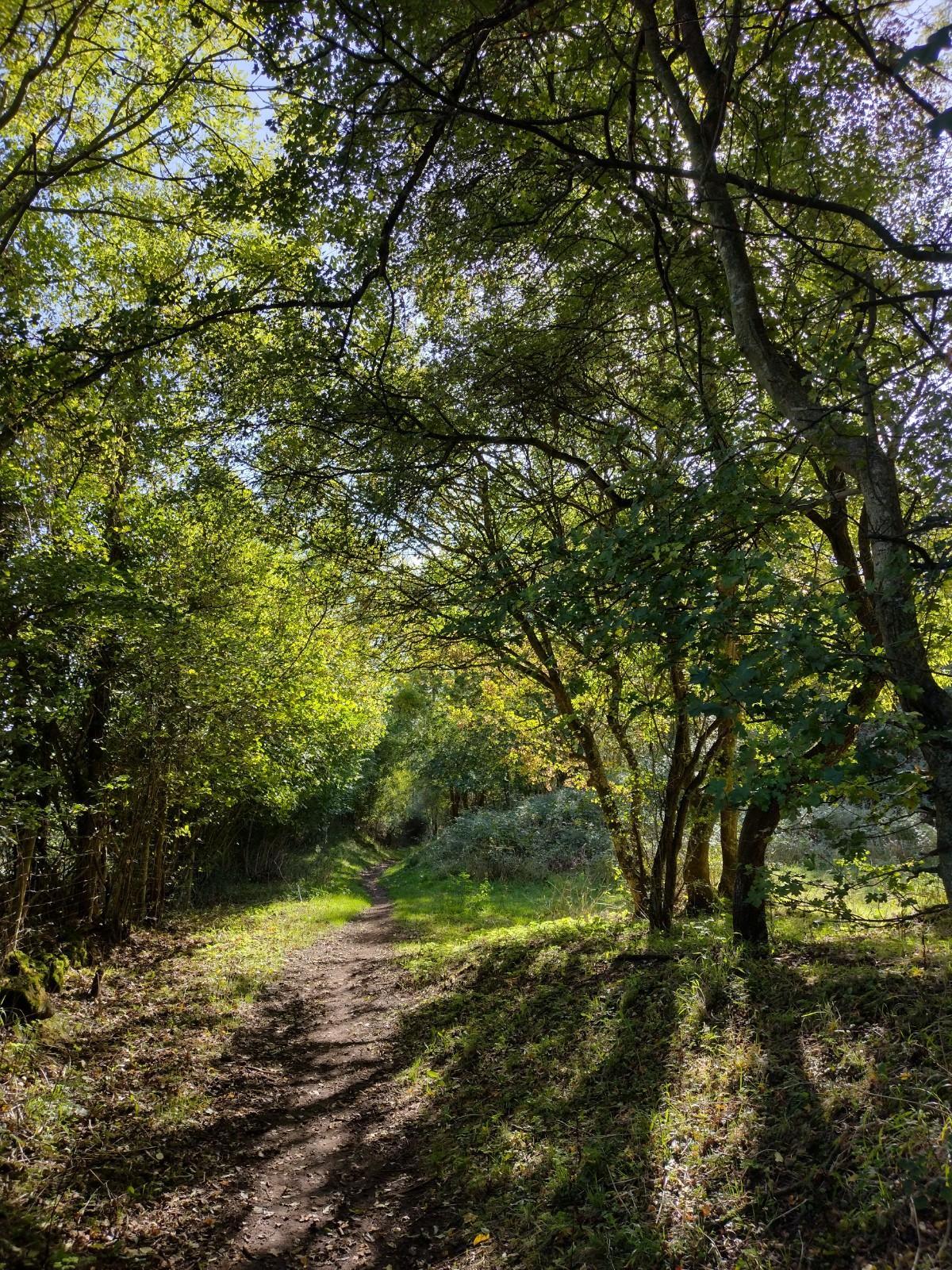
Onwards we walked now heading into a lovely mature section of riparian woodland where the 'seep seep' of redwing could be heard overhead before crossing a new metal bridge over the raging Frome and onward to the other side where we emerged onto Somme-like agricultural land where maize had just been harvested. We were still following the Frome Valley Walkway and now found ourselves at approximately half way through our planned walk, with our initial plan to walk onto the village of Iron Acton and back to the warm dryness of Sheena's house. However we became bogged down in the quagmire that is the Great British countryside at winter. Welly sucking mud was followed by calf deep puddles, or both, most exciting in many ways but it made onward travel slow and laborious. The countryside around here however was lovely and as it adjoined the Frampton Cotterell nature sites a lovely example of that new thinking of joined up landscapes making for a larger habitat species can move about in. Of course if we stopped developing on land, or reduced the intensity of agriculture we'd not need these refugia areas.

Back to the mud. After I'd moved south thirty years ago my late mum was astonished on visiting Dorset many years ago over Christmas. Up until that point she had only ever visited in the summer when dust devils rose from the hot baked earth of Hardy's Wessex. As we three yesterday plodged along this Gloucester footpath I thought of mum all those years ago astonished at the rivers of water rushing down country lanes or spilling down tracks. The countryside is nothing if not muddy in winter.
There is also increasing evidence that being close to mud is beneficial to our health. In her book 52 Ways To Walk, Annabel Streets discusses the benefits of mud, especially a microbiota butyrate which is meant to be good for our gut fauna. Another substance geosmin is known to induce feelings of calm according to evolutionary psychologists. But that aside there is however something very satisfying in squelching through mud on a walk, though as we were concentrating so much on where our feet were treading spotting any of the limited wildlife on show was a challenge.
Sheena pointed out she had done this route back in May while on a dawn chorus walk when it was a lot drier. The nature group itself have now counted over 80 species of birds in the area which is encouraging for a farmed landscape. On our visit in the flooded fields to our right gulls were afloat on the temporary lakes while rook, jackdaw and carrion crow circled about, and the chatter of smaller birds helped lift the spirits.

Eventually we reached Hoover's Lane and faced a choice - straight on took us to Iron Acton through more fields or turning right took us back to Frampton Cotterell along the very flooded looking lane. We decided on the latter option, not least as we were tiring a little with all this plodging, had begun to resemble drowned rats plus we craved a light refreshment. The unmade lane back was easy to follow but badly flooded along most of it's length, at one point the water was almost up to the top of my wellingtons. This was becoming quite an adventure, maybe next time I'll wear some chest waders.
The lane though was interesting, a lot of mature hedge trees and at one point I heard the pip pip contact call of a great spotted woodpecker just moments before it flew off, thankfully seen by both Sheena and Mrs Wessex-Reiver. I learnt that all the land to the right of us was under threat of development. Nothing decided yet but the pressure was on, and that is a worry for the nature group. But I can see why this land has potential for housing, large flat fields, next to an arterial road into Bristol, itself only half an hour's drive away as the advertising might say. In reality I discovered even now at rush-hour it can take an hour and a half to reach the centre of Bristol, just 8 miles away.
Onward we walked as the rain really did begin to intensify until finally arriving back in Frampton Cotterell, two hours after we set off and having walked 3.4 very wet miles. The hot chocolate and sausage roll in the village farm shop was most welcome after that.
Despite the rain, the flooding and the mud we had an excellent visit. Admittedly not the best day to take onboard the results of what this local wildlife group are doing, or trying to do, but with those 750 members of the Facebook site onboard, even if just 1% turn their interest into action they'll build up a loyal following and I hope they succeed in improving nature abundance and biodiversity in and around their village. I will come back in the summer when it is hopefully a little drier and see what it looks like when the various shades of brown under a leaded sky have departed.
Frampton Cotterell Nature Blog - further reading;
https://framptoncotterellnature.wordpress.com/about/






N2KuwBWk~%24(KGrHqQOKnMEvyFryqulBMMi,EV,jQ~~_12.jpg)
